



A sculpture of Ngurunderi, one of the Ngarrindjeri Nations great creation ancestral beings has been unveiled as part of the South Australian Granite Island Causeway project.
Standing atop a locally sources granite boulder, the 3.6-metre-tall sculpture of Ngurunderi represents the creation story specific to the area the Ngarrindjeri and Ramindjeri call Pultung (Victor Harbor), Kaiki (Granite Island) and Longkuwa (The Bluff).
The artwork, designed by renowned Ngarrindjeri artist Kevin Kropinyeri and built by local Adelaide artist Karl Meyer acknowledges Ngarrindjeri-Ramindjeri culture, language, creation stories and truth-telling.
South Australian Aborignal Affairs Minister Kyam Maher said the Ngurunderi sculpture created an opportunity for visitors to learn more about the Traditional Owners of the Fleurieu Peninsula.
"Although many South Australians have fond memories of Granite Island and the Victor Harbor area, prior to this project, little was portrayed about how culturally significant the region is to the recognised Traditional Owners, the Ngarrindjeri-Ramindjeri People," he said.
 The sculpture features Ngurunderi holding his Kaiki (spear) and Plonggi (club) which created Kaiki (Granite Island) and Longkewar (The Bluff). Image: supplied.
"Every time you visit Pultung, Kaiki and Longkuwa and see the fantastic sculpture of Ngurunderi next to the new Causeway, you will be reminded of how Ngurunderi shaped the landscape of the area."
The creation story tells of Ngurunderi travelling to Ramindjeri country where he was in pursuit of his two wives who had eluded him.
There he heard his wives splashing and playing in the direction of Kings Point, so Ngurunderi threw his club (Plonggi) down in anger, creating Longkuwa.
At Pultung, Ngurunderi threw his spear (Kaiki) into the sea, creating Kaiki (Granite Island).
Ngurunderi also walked over to Kaiki and made a shelter from granite boulders, a place now called Panggari Marti (Umbrella Rock).
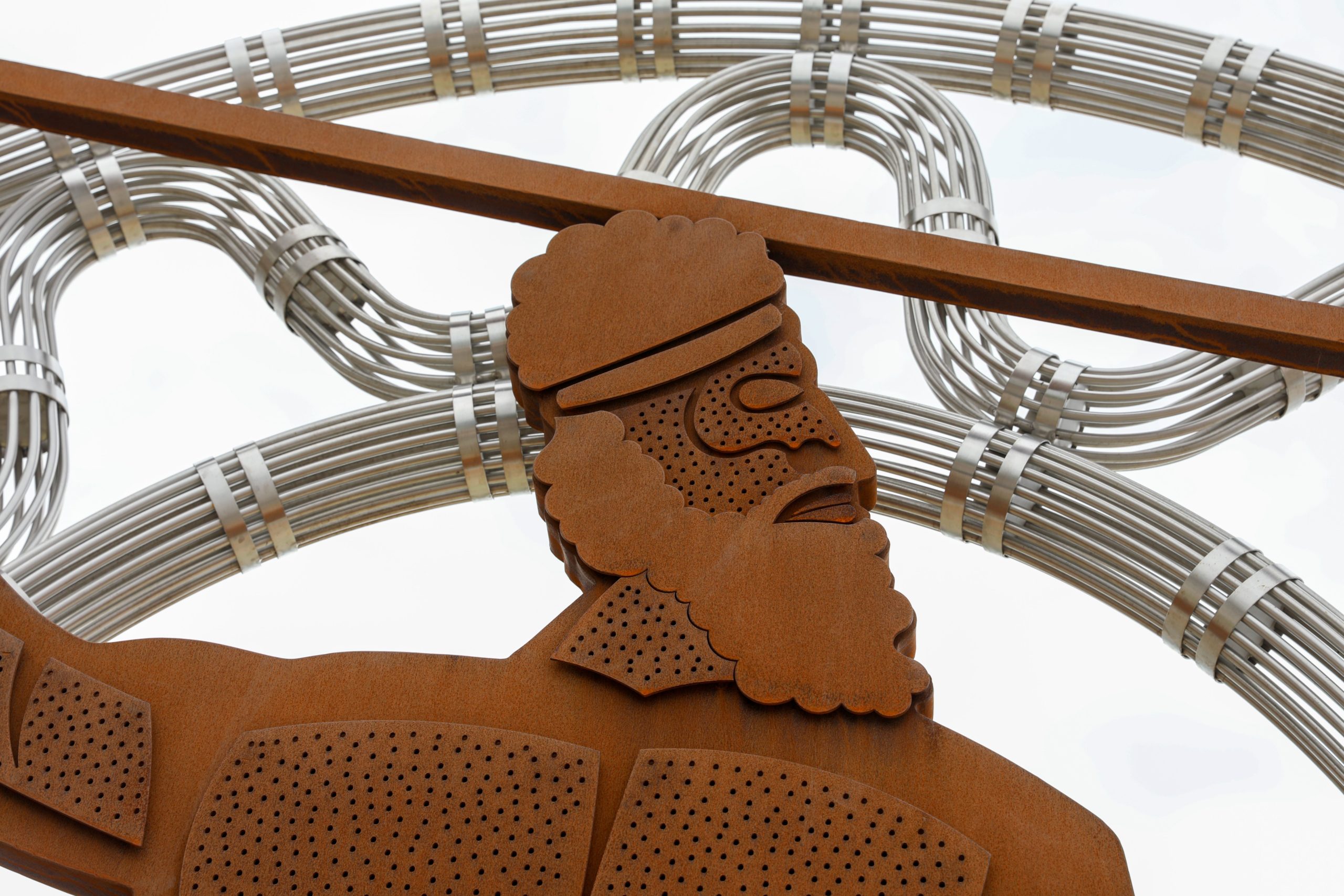 Ngurunderi's exploits shaped creatures, lore, dance, song, how to hunt, how to live and created the landscape throughout the eighteen Lakinyerar (Clans) of the Ngarrindjeri Nation. Image: supplied.
Mr Maher said the inclusion of the Ngurunderi sculpture, which builds on several Aboriginal-specific art outcomes delivered as part of the project, recognises the strong First Nations history and culture of the area.
"The Granite Island Causeway Project has not only secured the long-term future of a South Australian landmark but has also delivered a structure that is rich in cultural significance," he said.
"In addition to the Aboriginal artwork that has been etched into the Causeway, the sculpture of Ngurunderi marks the cultural significance and history of the Ngarrindjeri and Ramindjeri nations across the Fleurieu Peninsula."
The decommissioning works of the old Causeway are nearing completion, with the viewing platforms anticipated to be operational later this year.



