


The Tasmanian Football Hall of Fame has dubbed its latest Legend "a footy trailblazer in every sense of the word".
But for the Aboriginal man to write his own story in the shadows of a more infamous brother says a lot about the impact Des James had on the game in his adopted state.
James was one of the first inductees into the inaugural Hall of Fame and after waiting patiently since the class of 2005, the 71-year-old has been elevated to Legend status.
The honour adds just another chapter and further notoriety to the Yorta Yorta family following umpire Glenn James first receiving an Order of Australia Medal in 1984.
But the narrative was never about egos since Glenn was the first Indigenous umpire to appear in the middle during the VFL's halcyon days, including holding the ball up to start grand finals, but for the two leaders of their 13 siblings to break new ground.
The duration of the decorated careers were largely in the back half of the 1970s, into the 1980s when racist attitudes to the first inhabitants of the land remained rife.
What Glenn did to gain the respect and admiration from players for his genial ways, Des wowed the fans who marvelled at his dashing runs out of the back pocket.
The sight of the bouffant hair and prominent moustache added to the cult following.
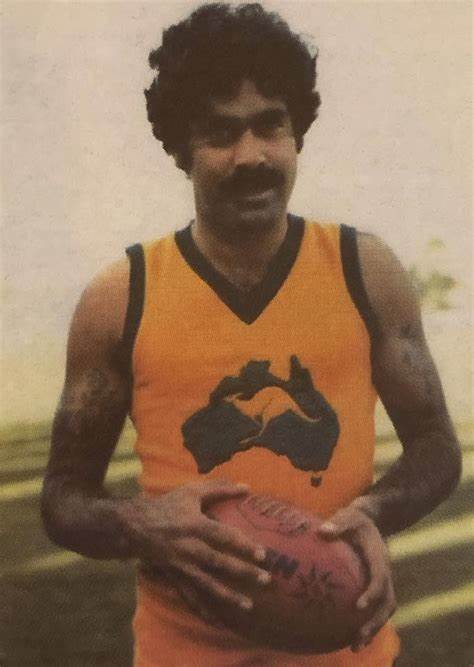
James was a Tasmanian State of Origin Carnival representative in 1979 (All-Australian) and 1980. (Image: supplied)
But there was more about James than just a novelty factor.
The game style of the prolific talent from Shepparton was well ahead of his time and definitely unique to anything witnessed around Hobart.
So much so that Tassie pundits in the state, with long enough memories to remember, argue that James is the greatest Aboriginal star to grace their cold, damp footy ovals.
At least the greatest from interstate, playing a decade for once popular suburban club, Sandy Bay, on Palawa land and hundreds of kilometres away from his mob's country.
That legacy was upheld after playing a pivotal role towards Sandy Bay capturing the notable 1976-78 TANFL three-peat in the club's greatest hour of its last premierships.
James had been specifically recruited to fill in a need, after the club's undefeated 1973 side had suffered a shock grand final loss.
It was a solitary season from that same year in the New South Wales Football League, whose former Sandy Bay hero and Newtown coach, Gordon Bowman, had tipped that James would be an acquisition to his former team.
Little wonder James stood out after just his third senior season in the highly-regarded Goulburn Valley competition, where he finished in third place in the league's best and fairest despite missing seven out of 18 matches the year before moving to Sydney.
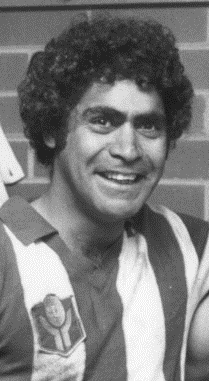
He seemed to peak and showcase his skills best on the interstate stage for Tasmania.
At the 1979 State of Origin Carnival in Perth, James was the state's sole representative in the All-Australian team, named in the back pocket next to legendary VFL defenders Gary Malarkey at full-back and Geoff Southby in the other pocket.
By the time the once Sandy Bay captain's career had wound down after retiring at the end of 1986 while playing two swansong seasons for Clarence, he would be named in the 'Bay's Best 25' in 2001 of the past century.
Living in football immortality in the annals of the game almost beckoned again just a few years later.
That was still arguably the greatest honour regardless after James was nominated for the Australian Football Indigenous Team of the Century.
To celebrate the 100th anniversary of Joe Johnson being the first Aboriginal player to be selected in a VFL side for Fitzroy, James was one of 35 players to make the shortlist.
But standing in the way for the back pocket position were three-time AFL premiership star Chris Johnson and West Perth follower and resting defender Bill Dempsey, while in a twist Glenn James had a hand in the team's final lineup on its selection panel.



