




A second New Zealand institution has agreed to the return of First Nations artefacts, with four Warumungu cultural objects to be returned to central Australia from an Aukland museum.
It comes after an agreement between the Northern Territory's Warumungu community, the Australian Institute for Aboriginal and Torres Strait Islander Studies and Aukland's Tāmaki Paenga Hira War Memorial Museum.
The agreement will see two wartilykirri (hooked boomerang), a palya/kupija (adze) and a ngurrulumuru (axe/pick) returned to the Warumungu people later this year, who are the the traditional custodians of the land in and around the township of Tennant Creek.
The boomerangs, adze and axe/pick were collected from the Tennant Creek area early in the 1900s by Baldwin Spencer, a well-known anthropologist who worked alongside Warumungu people and the then telegraph operator of Tennant Creek, James Field.
Warumungu Elder Michael Jones said his community appreciated the museum's response to having the objects returned.
"They (the artefacts) been taken away before us, but we know that they belong to Warumungu people as the new generation," he said.
Mr Jones and fellow Warumungu community members spent considerable time viewing photographs of material in the museum's collection, with the wartilykirri (hooked boomerangs) being of special interest.
"You can go all around Australia and you will see that bit (the notch beneath the curve) ... I used to see my old father make them," they said.
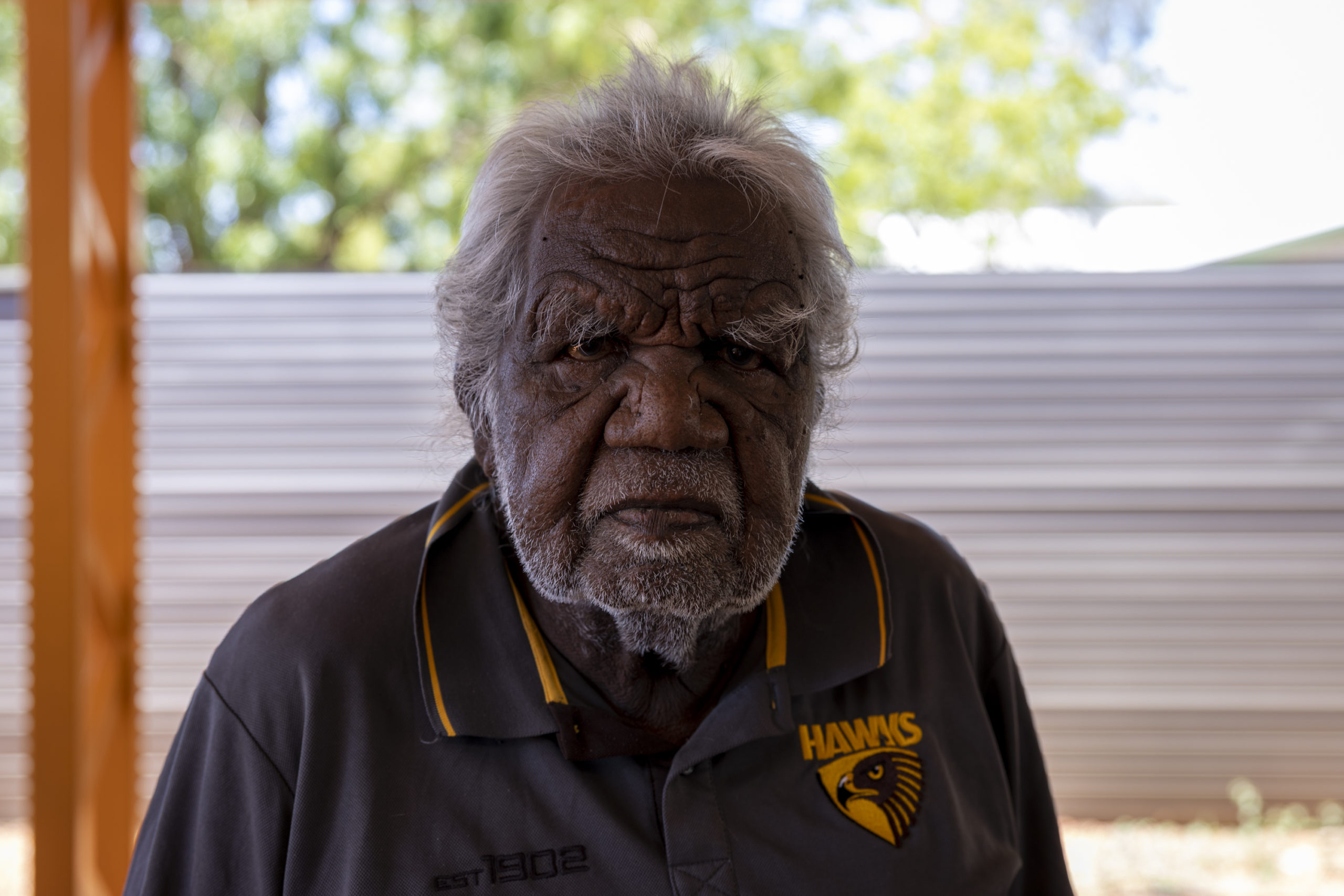 Senior Warumungu man, Michael Jones. Image: AIATSIS.
"These old ones they're really different, really thick."
The Warumungu community members said the hooked boomerangs took significant time to make, and were often handed down to younger generations.
"See this boomerang, it must have taken him six months or even more."
"He would carry it around every day and if he got bored, he would start again.
"Most of them boomerangs were passed to the next generation.
"It's a precious thing."
The return of the Warumungu objects is the result of ongoing work by the AIATSIS' Return of Cultural heritage team, who identify materials of cultural value outside of Australia and initiate conversation about their return.
The return is the second recent repatriation agreement of culturally significant objects from New Zealand, with six culturally significant objects of Warumungu origin to be returned from Dunedin's Tūhura Otago Museum.
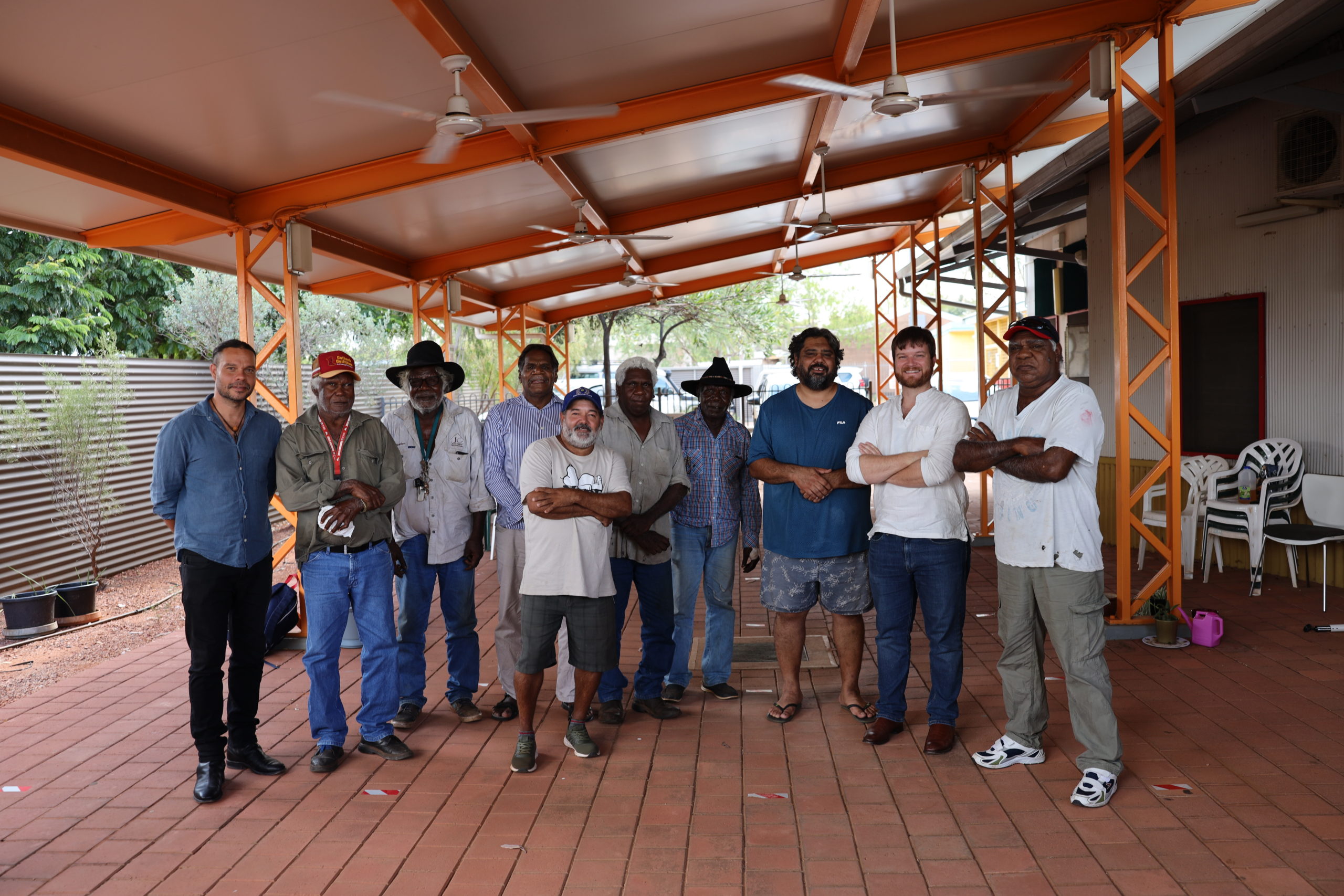 Senior Warumungu men and AIATSIS staff following a community engagement meeting about the objects' return. Image: AIATSIS
In responding to the announcement of the objects' return, Federal Minister for Indigenous Australians Linda Burney highlighted the importance of returning cultural items of significance to traditional owners.
"The return of Warumungu cultural heritage material is fundamental to the processes of truth-telling and reconciliation," she said.
"'It supports the transfer of knowledge, cultural maintenance, restoration and revitalisation for future generations."
Ms Burney also praised the joint efforts of AIATSIS and the Warumungu people and cooperation of the Tāmaki Paenga Hira Auckland War Memorial Museum in agreeing to the return of the objects.
"I commend AIATSIS for the work it has undertaken with the Tāmaki Paenga Hira Auckland War Memorial Museum to negotiate the unconditional return of this important material," she said.
"I would also like to extend my heartfelt gratitude to the museum for the good-faith return of these items, a move that recognises the importance of cultural heritage to identity."
A Warumungu delegation will travel to New Zealand alongside AIATSIS' Return of Cultural heritage team members to collect the items later this year.
Once returned, they will be displayed at Tennant Creek's Nyinkka Nyunyu Art and Culture Centre.



