




The Aboriginal Peak Organisations of the Northern Territory (APO NT) and Aboriginal Housing NT have joined the Central Land Council in calling for an urgent increase to the Remote Area Allowance in the face of rising fuel costs.
On Thursday, APO NT chairperson Theresa Roe noted that most people in remote communities rely on fixed incomes and have little capacity to absorb rising costs.
"Families will struggle to keep up with a surge in fuel prices and the price of food going up," she said.
APO NT called for the allowance to be immediately linked to the consumer price index, backdated to when the allowance was introduced in 1984.
The representative group for the Territory's Indigenous peak bodies also called for the base rate of the allowance to be substantially increased so that it reflects the extreme cost of living remotely.
Ms Roe said this would make Australia's social security system fairer.
"We strongly support Labor's remote store subsidy scheme, but what we are witnessing right now is that it is vulnerable to global uncertainty and energy price rises," she said.
"The exact same amount that was paid 25 years ago is still being paid today, while prices in stores and at the fuel pump have gone up a lot over this time."
Aboriginal Housing Northern Territory (AHNT) said on Thursday that many families were already paying substantially more for essential goods and services than those living in urban areas before the current fuel crisis, and petrol is now pushing up to $4 a litre.
AHNT noted that the significant increase in freight costs will see further price inflation for fresh food, household goods and essential services.
"With many remote households paying rent under the Remote Rent Framework, rising costs for fuel and essential goods are placing additional pressure on already stretched household budgets... high rental costs due to the Remote Rent Framework makes adequate income support critical to maintaining stable tenancies," the organisation said.
The NT's peak Aboriginal housing body reinforced the comments of Central Land Council general manager Dr Josie Douglas, who noted earlier this week that while recent initiatives such as low-cost essential subsidies are welcomed, rising fuel costs will erode the schemes' gains by increasing the price of essential items and services.
AHNT said the Remote Area Allowance, introduced more than four decades ago to offset higher costs, has failed to keep pace with economic realities.
The group's chief executive, Leeanne Caton, said AHNT supports calls for urgent action to ensure remote households receive fair and adequate financial assistance.
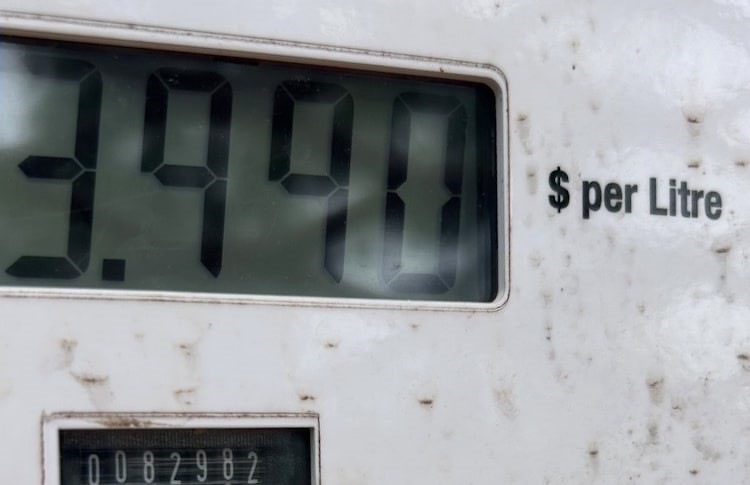
The cost of living remotely is estimated to be approximately 40 per cent higher than in capital cities.
Ms Roe noted that Australian Bureau of Statistics data shows between 50 - 75 per cent of Aboriginal families in remote communities live below the poverty line.
"Now is the time to make the change and increase the allowance," the APO NT chairperson said.
APO NT cited recent reports making a strong case for increasing the allowance including the Economic Inclusion Advisory Committee's 2025 Report to Government, the Productivity Commission's 2024 Inequality Snapshot, and the final report of the Senate Inquiry into the Extent and Nature of Poverty in Australia (2024).
In response to the Central Land Council's calls for reform earlier this week, a Department of Social Services spokesperson told National Indigenous Times the government "understands the additional cost‑of‑living pressures faced by Australians living in remote and very remote locations," including challenges related to food security and fuel prices. They added the government is considering "ways to support households in these regions".
RAA recipients have "benefitted from increases to their primary income support payment or other supplementary payments, the latest of which started on Friday," the spokesperson said.
"For example, since the government was elected, the typical rate of JobSeeker Payment for a single person without dependent children has increased by $166.00 a fortnight. It is an increase of 25.5 per cent in almost four years, providing over $4,300 in additional support each year."
National Indigenous Times has contacted the federal government for further comment.
With additional reporting by Dechlan Brennan



