


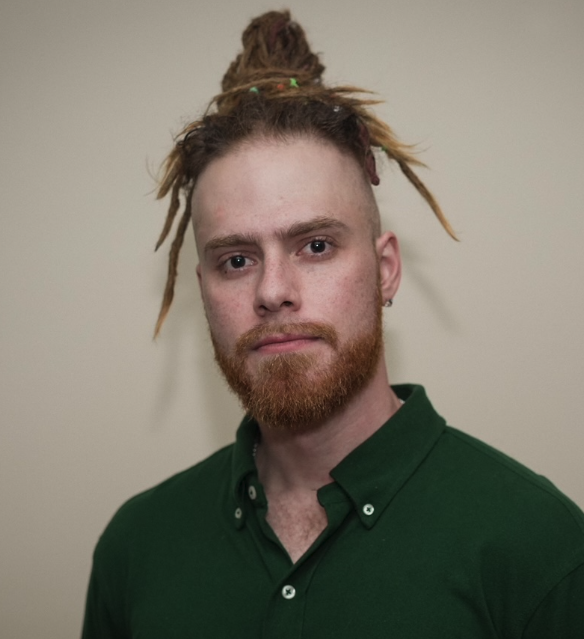

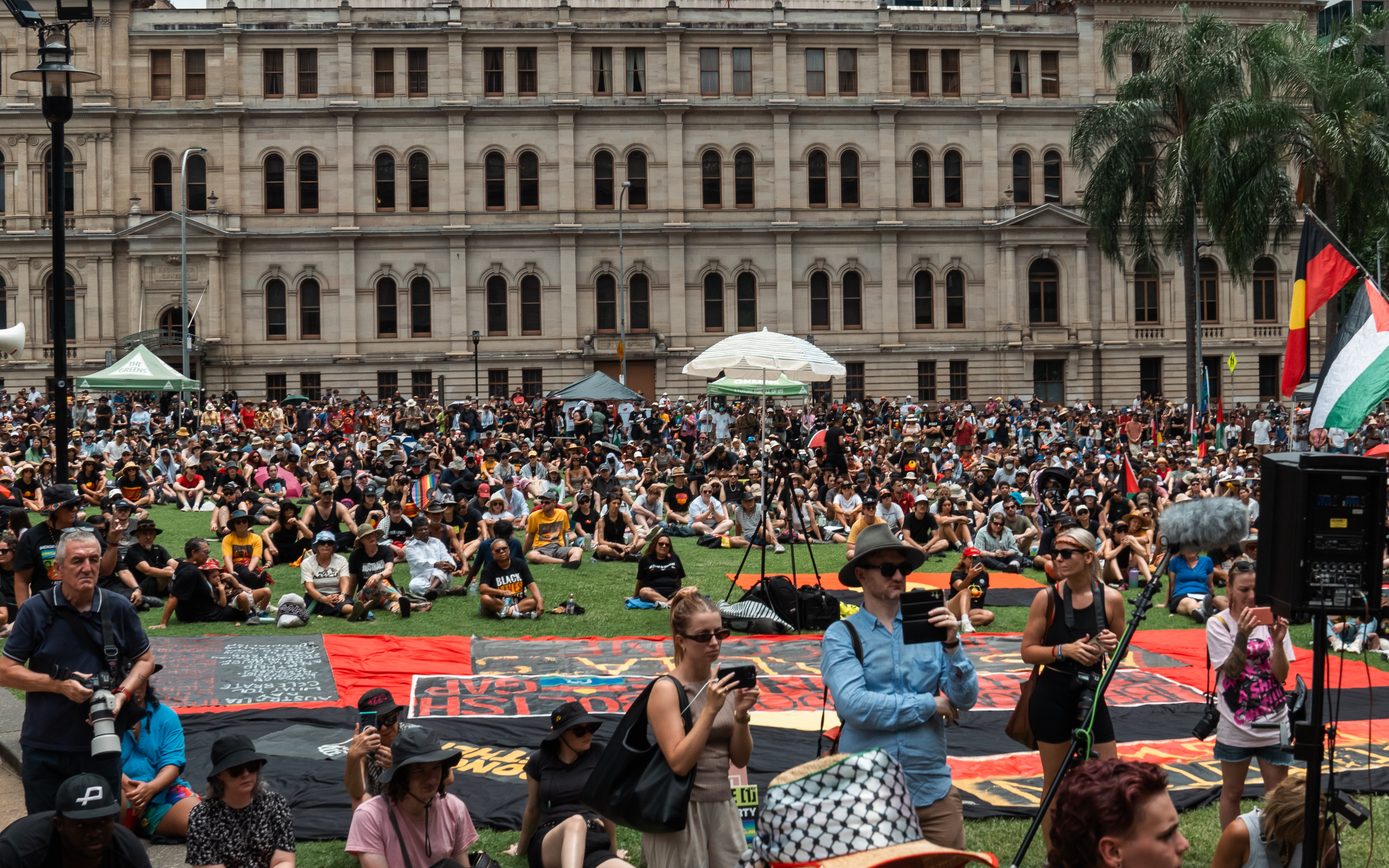
Thousands gathered in Meanjin (Brisbane) for the annual Invasion/Survival Day rally, enduring the heat to march in solidarity.
The event featured speeches from prominent activists and community leaders, including Uncle Coco, Uncle Lionel, William Sim, Guyala Bayles, and Ruby Wharton.
Despite Meanjin's history of peaceful rallies, there was a noticeable increase in police presence compared to previous years.
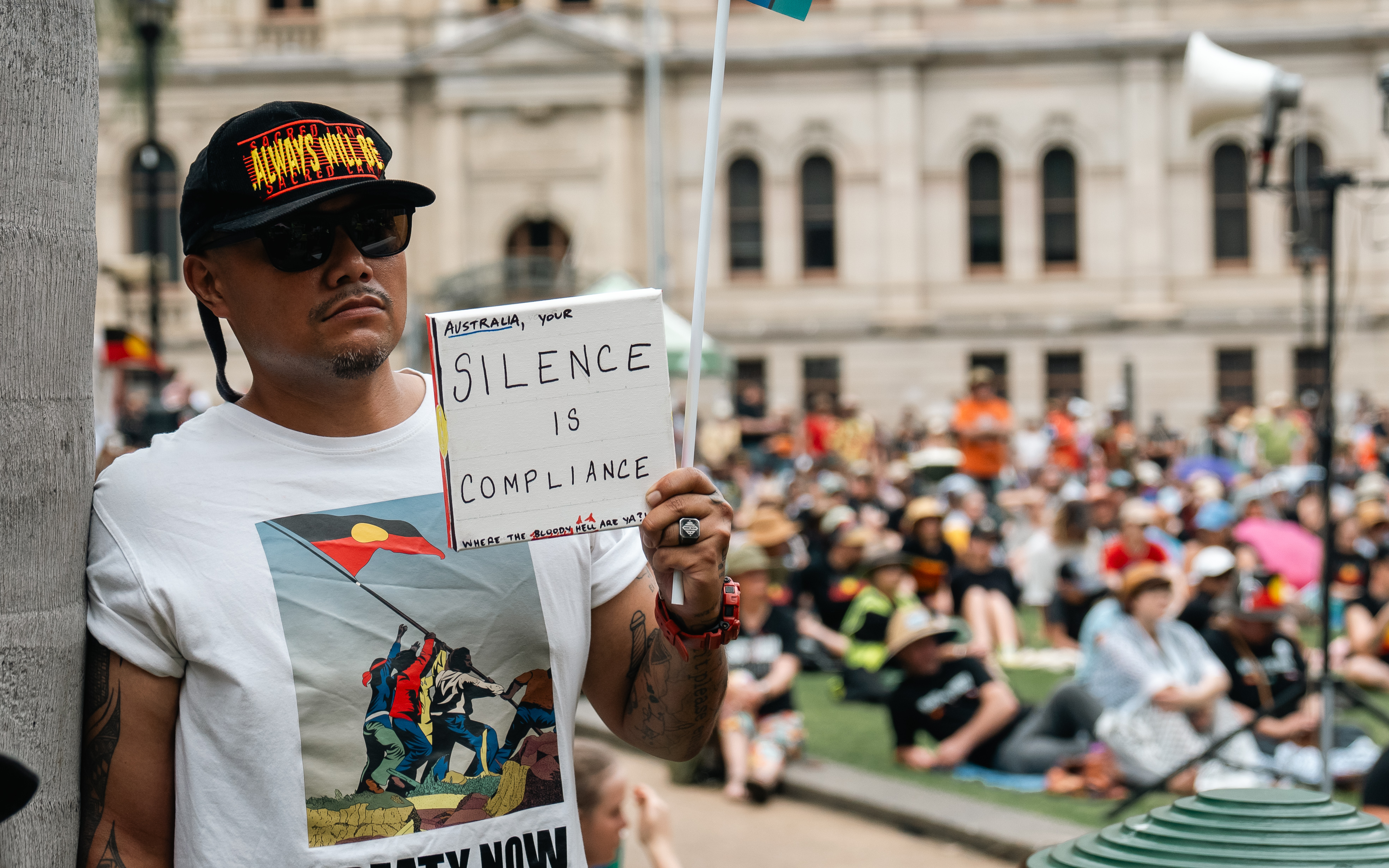
The rally began with speeches in the city's gardens before hundreds marched across Victoria Bridge towards Musgrave Park.
Chants of "Always was, always will be, Aboriginal land" and "No justice, no peace, no racist police" echoed through the streets.
Birri Gubba and Wonnarua woman Guyala Bayles, a staunch activist and young leader, performed a powerful poem that resonated with the crowd.
She spoke about the significance of the day.
"It means remembering and acknowledging our ancestors, who were murdered, raped, and completely lost their culture," she said.
"Being here, it's empowering to see that we are still here."
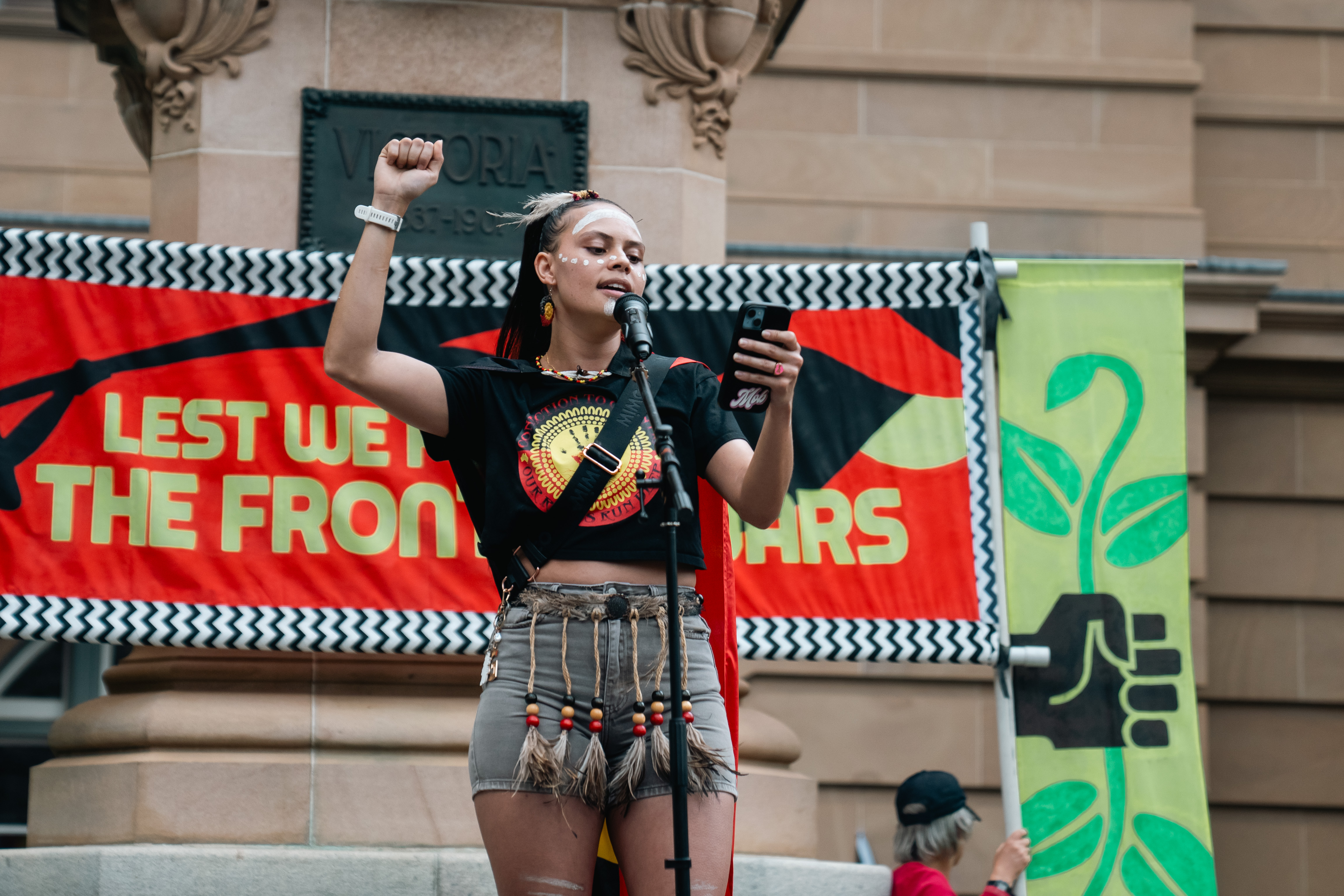
She also called for reflection from non-Indigenous Australians.
"I think it's important for white Australia, non-Indigenous people, to stop celebrating a day of mourning for our mob—have some respect and empathy."
Mununjali man, William Sim spoke, addressing the ongoing struggles faced by Indigenous communities.
"I'm not going to celebrate Australia today, tomorrow, or the next day," he said.
"There's nothing to celebrate about genocide."
He also criticised public figures who he believes have emboldened racist rhetoric.
"The most vile bigots are feeling more confident to spew their rhetoric," he said, calling out federal Opposition leader Peter Dutton and new Queensland Premier David Crisafulli by name.
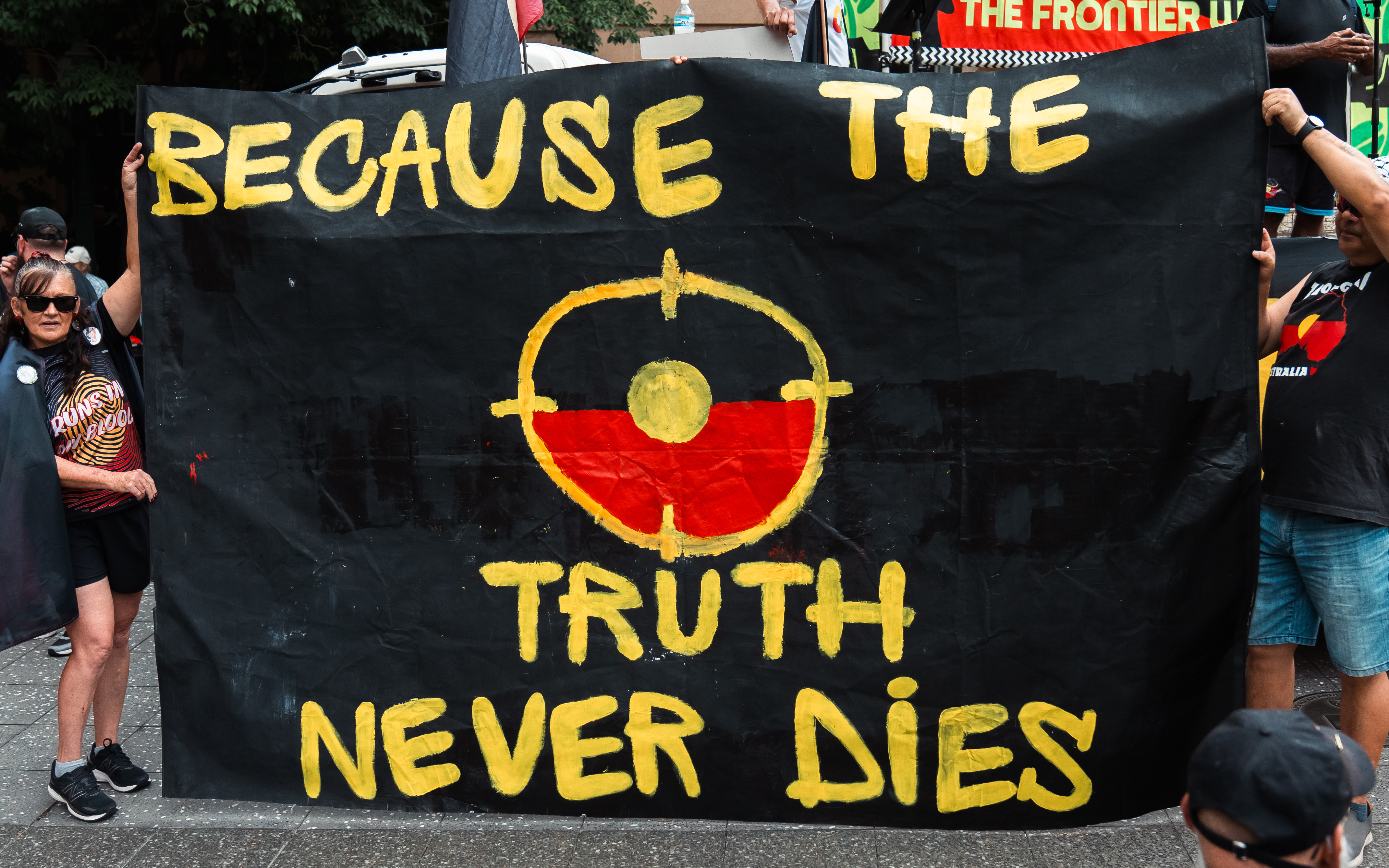
The Meanjin Invasion Day rally reaffirmed calls for justice and recognition, as thousands took to the streets to challenge the ongoing impacts of colonisation and systemic discrimination.
The crowd also included many supporters of Palestinian self-determination, reflecting a broader movement against oppression and colonialism.



