




Warning: Aboriginal and Torres Strait Islander people should be aware that this article contains images and names of deceased persons.
The 40th anniversary of the return of Uluru-Kata Tjuta National Park to the Aṉangu, the sacred sites' Traditional Owners, will be marked this weekend - a milestone Prime Minister Anthony Albanese has described as "a powerful moment in the story of our continent".
The Prime Minister will travel to Uluru on Saturday to join celebrations and deliver a speech reflecting on four decades since the landmark Handback ceremony - a defining moment in the history of Indigenous land rights, and one which followed years of campaigning by Aṉangu Traditional Owners.
In 1983, Prime Minister Bob Hawke announced his government would amend the Aboriginal Land Rights Act to return the title of Uluru-Kata Tjuta National Park to its rightful custodians.
Two years later, on October 26, 1985, hundreds of people looked on as Governor-General Sir Ninian Stephen passed over the title deeds of Uluru-Kata Tjuta to Aṉangu Traditional Owners, who then signed a 99-year lease to jointly manage the park with the Commonwealth through the Director of National Parks.
In an extract of his speech over the weekend, the Prime Minister quotes Aṉangu Traditional Owner, Aunty Pamela Taylor, who attended the 1985 ceremony, and whose father, Tony Tjamiwa, was instrumental in the long battle towards the handback of the sacred site.
"We were so happy that after all that struggle, all the talking, the fight to get it back - that it was finally going to be given back ... Everybody drew together to celebrate, it was a really happy time," Aunty Pamela said on the 30th anniversary of the Handback, remembering the day.
Aṉangu Chair of the Uluru-Kata Tjuta Board of Management, Tapaya Edwards, said the Handback remains deeply meaningful for Traditional Owners.
"Uluru and Kata Tjuta are very important to Aṉangu. We have always lived here, and having the land returned to us 40 years ago was an important moment for us," Mr Edwards said.
"The national park is a place where Tjukurpa - Aṉangu law and culture - can be kept strong for future generations.
"There is still much work to be done, and we look forward to seeing our young people carry this flame forward, as they learn Aṉangu traditional knowledge and Western knowledge to care for Country and keep Tjukurpa strong."
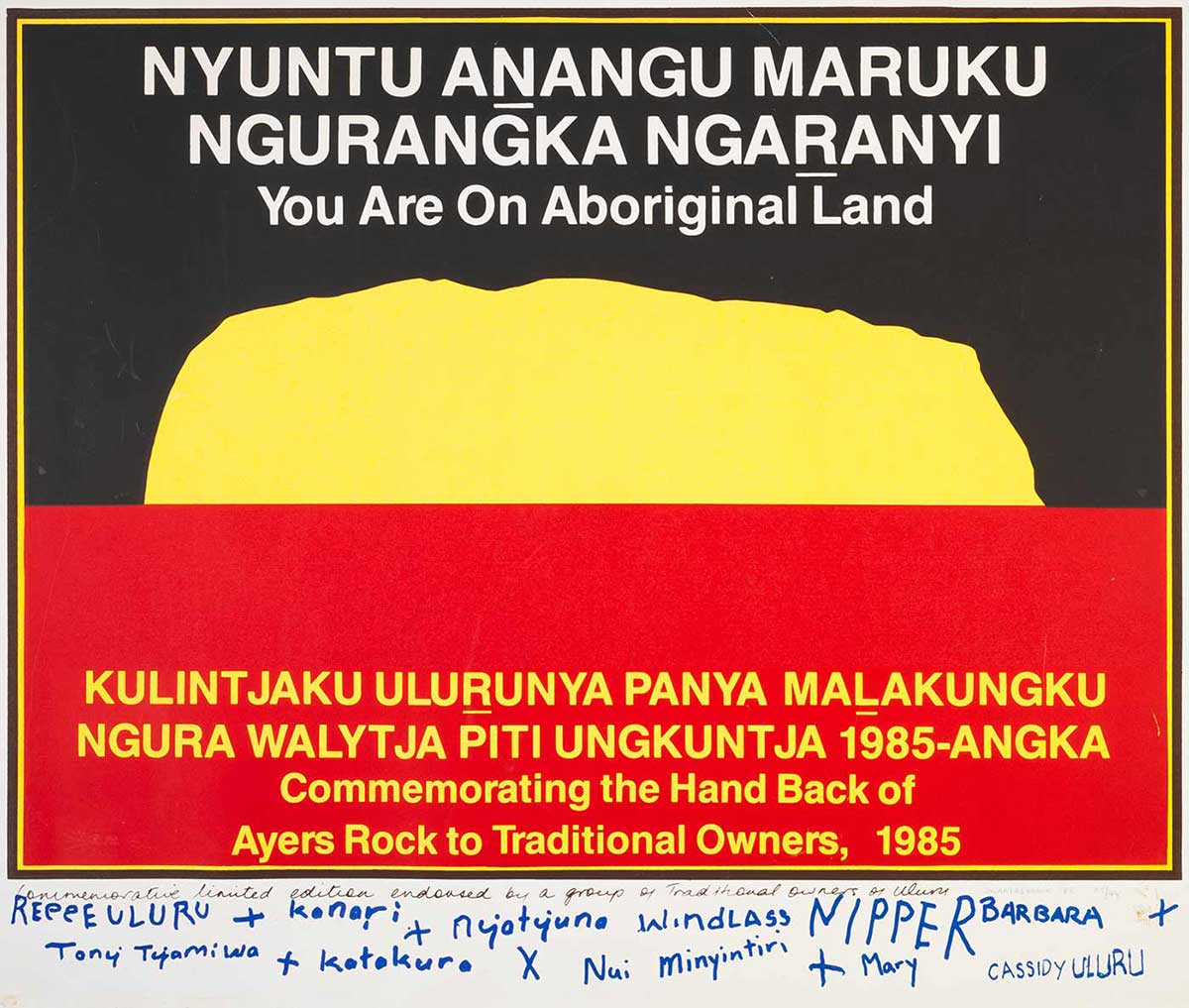
This weekend's celebrations carry the theme Waru Iritinguru, Tiliningi Kurunpa Kuranyukutungku Katiringkupai - "Fire of the Past, Igniting the Hearts of the Future" in Pitjantjatjara.
A major public event will be held at the Talinguṟu Nyakunytjaku sunrise viewing area at Uluru. It will feature inma (traditional dance), a marketplace of Aṉangu arts and crafts, and performances by local Indigenous musicians.
The Uluru and Kata Tjuta National Park Cultural Centre was opened in 1995 to mark the 10th anniversary of the Handback. It will feature an exhibition showcasing four decades of joint management through artworks, photographs, and historical materials.
Federal Minister for Indigenous Australians, Malarndirri McCarthy, said the Handback was "a defining moment in the history of land rights in Australia".
"A recognition of the Aṉangu people's deep and enduring connection to Country and a powerful act of justice," she said. "It laid the foundation for other landmark returns across the nation and continues to shape how governments and communities work together to honour First Nations people and their custodianship of land."
Federal Environment Minister Murray Watt added that the Handback was a "historic moment of justice - recognising Aṉangu as its true owners".
"Joint management with the Commonwealth ensures Aṉangu have a lead role in the protection of the enormous environmental and cultural values of this significant national park," he said.
In his speech, Mr Albanese will reflect on the enduring symbolism of the Handback and its place in the national story, one which stands tall in the story of Australia.
"It was a milestone in Aboriginal land rights, and a powerful moment in the story of our continent," he will say.
The Prime Minister will note the Handback exemplifies Australians "at our best together," acknowledging the strength of Aṉangu culture and the success of 40 years of joint management.
"Forty years ago, after decades of exclusion, the Aṉangu's rightful relationship with this place was finally recognised. And the Aṉangu responded by choosing to share it with all of us," he will say.
"Tourists flock to it, rangers care for it. All Australians are welcome here. The whole world is welcome here.
"Here in the centre of our continent, there is room for all of us. That is a privilege we can take joy in. It is something we can take pride in."
He will end his speech by adding: "On behalf of Australia, I say to the Aṉangu: We thank you for your patience. We thank you for your grace. And we draw together in happiness. Uwa palya, wiyaringu (Yes, it's good)."



