


Before legendary Essendon coach Kevin Sheedy created the blueprint for Dreamtime at the 'G, football's ideas man was a wily back pocket plumber.
It was from the last line of defence Sheedy first marvelled at an unassuming Aboriginal teenager on Richmond's half-back flank.
Derek Peardon piqued Sheedy's interest and not just because the speedster was unheard of in an era known for long kicking.
While Sheedy's career spanned 930 games on the ground and in the coach's box, Richmond's first - and Tasmania's second - Palawa man in the VFL days only lasted 20 appearances.
But Peardon's influence stayed in Sheedy's mind for four decades, igniting the concept for Richmond and Essendon to first celebrate in 2005 what Aboriginal culture brought to the game.
 Derek Peardon as a schoolboy in Tasmania.
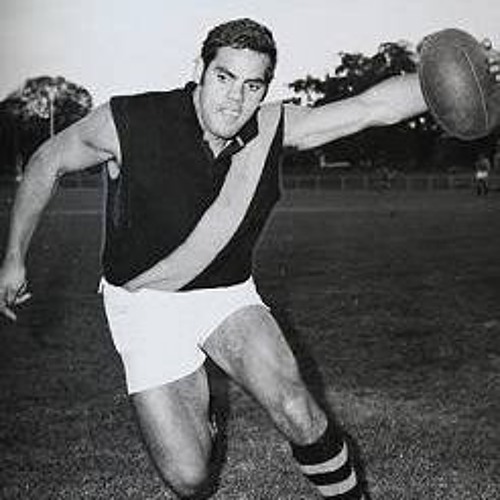
"Sheedy does reckon I inspired him to do that - he told me," Peardon, now 72, said.
"He went from meeting me, to get and meet other (Indigenous) players and travel around the Top End to those little towns, to the Dreamtime at the 'G.
"So, I am very proud of my part."
The journey back to the MCG in 2015 was his first on the hallowed turf in 44 years.
Peardon had knocked advances from the club back for six years until his sister, Annette, a state reconciliation advocate, finally intervened.
"She rang Richmond up to book us in, otherwise I would have said no again - so it was a homecoming," Peardon said.
"I'm the type of person who keeps to himself and have always been a bit of a loner.
"Walking out was a bit scary to be honest. I haven't been used to that sort of a crowd."
How Peardon first got to Richmond is another story.
He was born on Flinders Island - something Peardon was unsure of until government papers confirmed that - but his earliest memories were just south on Cape Barren Island, living in a tent and eating wallaby.
"On Cape Barren, I had this little plastic football when I was four and I'd kick it day in, day out," he said.
Like many, Peardon's is a life impacted by the Stolen Generations. His mother copped three years of hard labour for supposedly neglecting Peardon and his sister.
He never saw his mother again after authorities in the middle of the night awoke seven-year-old Peardon to leave for a Launceston orphanage.
"If I hadn't gone to that home, I have often thought about it, would I have gone that far?" he said.
"Would I have played football, or would I have stayed on Cape Barren?
"I just don't know, but I think about it a lot.
"I missed out on my culture and my family.
"I hated the boys' home, but sometimes I think it might've been for the best."
The wingman was considered once the most gifted Aboriginal prospects since Polly Farmer after tying for the best player at the 1964 national carnival.
But Peardon's time on the ground would prove fleeting.
"I didn't play every week - it was up to the people at the home whether I did or not," he said.
 Derek Peardon with his daughters.
Sporadic games through high school were still enough to grab the attention of St Kilda talent scouts, who brought Peardon to the club on January 13, 1966.
Three other clubs were made aware of his arrival, including Richmond who snuck the then 15-year-old to a Sunday morning training session at Punt Road after the orphanage's superintendent approved.
Peardon debuted in the seniors off the bench in 1968, aged 17.
But back and knee injuries ensured he was never able to break up that centreline of Francis Bourke, Billy Barrot and Dick Clay, and he left in 1971.
Six knee operations impeded Peardon's reputation for untouchable speed that left rivals all around his home state in complete awe.
"I think I was too quick," he said on reflection.
"But as my sister always said, my body wasn't ready when I was 18 or 19."
- Story by Andrew Mathieson



