


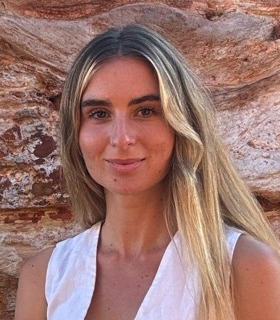

Governments across Australia have poured millions into coercive-control campaigns, but domestic violence advocate Ashlee Donohue says the failure to properly fund frontline services is leaving Aboriginal women at deadly risk.
"You can't educate your way out of violence if women have nowhere safe to go," Ms Donohue said.
Coercive control is defined by governments as a pattern of repeated behaviours — including manipulation, intimidation, isolation and financial control, and physical violence — used to dominate a partner and strip away their autonomy.
Those campaigns have included publicly funded awareness initiatives in NSW, WA, Queensland, South Australia and the ACT, while Victoria, Tasmania and the NT have prioritised broader family-violence prevention and education.
Ms Donohue, a proud Dunghutti woman, does not dispute the harm coercive control causes but she argues public messaging is being prioritised over the practical infrastructure women need to survive.
"I'm not saying coercive control isn't real — it is," she said.
"But it does not trump the horrific violence Aboriginal women face in this country, driven by men and oppressive systems."
She wants governments to invest far more heavily in what she calls the "on-the-ground basics": safe houses, women's refuges, crisis accommodation, transport, and properly staffed services for women trying to leave violent relationships; especially in regional and remote Australia.
"It's our women who end up being put in police cells and hospital beds, and too often they die from injuries caused by domestic violence."
The Department of Social Services responded to Ms Donohue's claims, saying the Australian Government had made "the single biggest investment of $262.6 million directly towards addressing immediate family, domestic and sexual violence safety needs of Aboriginal and Torres Strait Islander families and communities".
The department said this included funding to Aboriginal and Torres Strait Islander community-controlled organisations to deliver frontline family, domestic and sexual violence services, support for women leaving violence through the Leaving Violence Payment, programs and services for children and families, and initiatives to increase crisis-accommodation capacity.
Ms Donohue's advocacy spans both frontline service delivery and education.
She is the CEO of Mudgin-Gal Women's Aboriginal Corporation, an organisation that provides culturally safe support, advocacy and crisis services for Aboriginal women and children experiencing domestic and family violence in NSW.
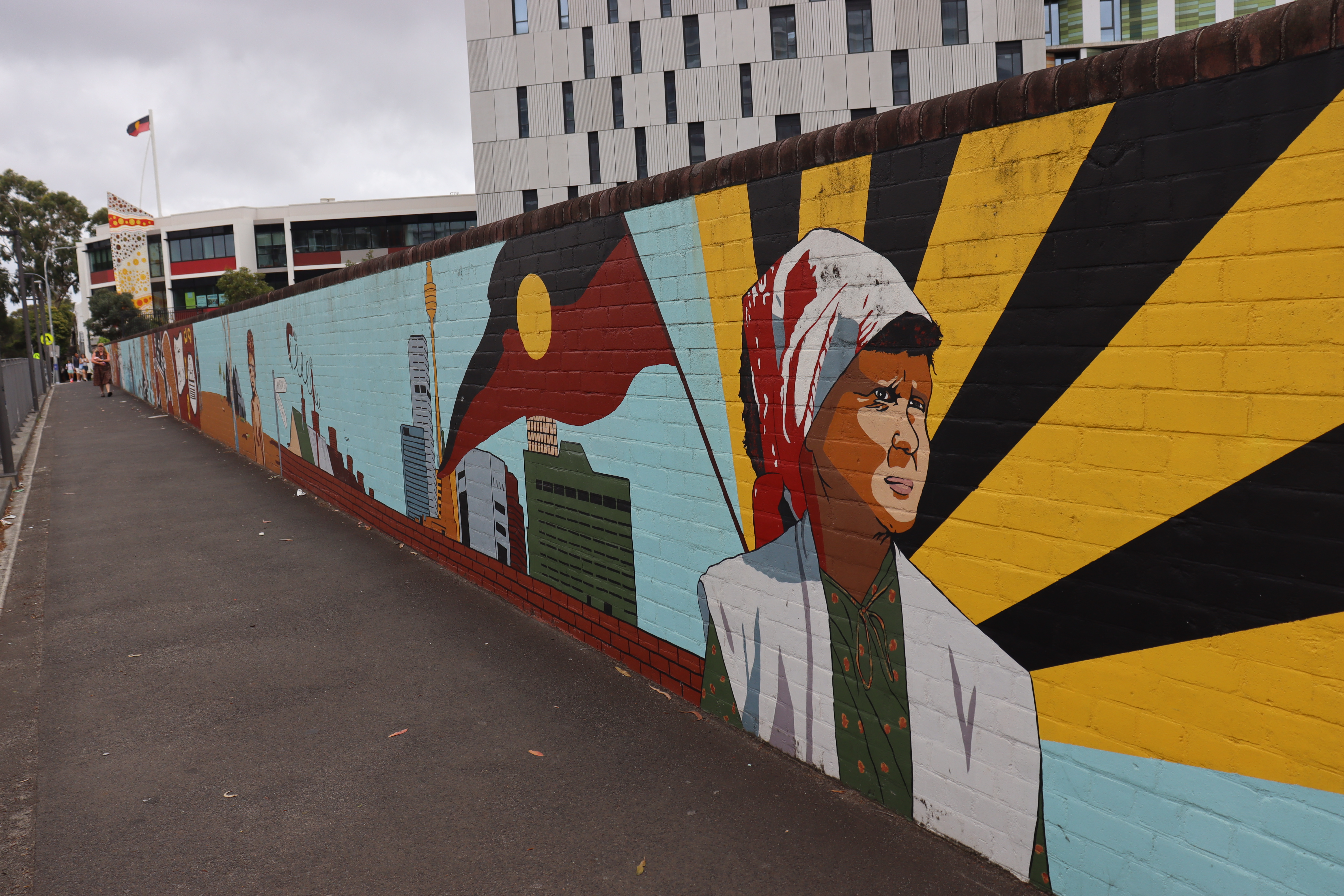
She also works in research, including as a lead writer on the NRL's Voice Against Violence domestic violence education resource, and is the author of Because I Love Him, a memoir that documents her survival of a 14-year violent relationship.
"My goal in writing this book was so women realise they don't have to go through what I went through in order to leave," she said.
In the memoir, she writes with blunt candour about the internal logic that can take hold in a violent relationship —the way fear can be misread as proof of love.
In one passage, she describes finding out her partner has struck another woman that he is romantically involved with and feeling a flash of terror that she interprets, instinctively, as meaning he must love her.
"I felt shame that it was my first thought," she said.
"But it was toxic love. And with toxic love, it's not love — it becomes a need. An addiction."
She describes "taking responsibility" as part of her own recovery — not in the sense of blaming herself for violence, but in naming the psychological hooks that kept her there, so she could unlearn them.

She said she has sometimes been discouraged from speaking that openly, including by a non-Aboriginal woman in the domestic violence sector who warned it could sound like victim-blaming.
"I remember thinking: 'why can't I say that?'. This is my experience."
For Ms Donohue, the exchange reflects a broader problem: a domestic violence sector dominated by a white, middle-class academic lens that often overlooks the realities facing Aboriginal women, particularly in remote areas.
"Domestic violence statistics are huge in regional and remote areas in Australia," she said.
"But those voices aren't being heard because it gets washed out by a middle-class white lens that does not see Aboriginal women."
She said the shortage of safe housing shapes every decision Aboriginal women make when trying to leave, with refuge beds often full and "safety" reduced to a car or a crowded house.
Across Australia, Aboriginal women are 34 times more likely than non-Aboriginal women to experience domestic and family violence, and to be hospitalised or killed as a result.
Ms Donohue said any national conversation about coercive control that does not start with that disproportionate harm — and the lack of safe options on the ground — risks becoming another campaign that looks good on a billboard but changes little for women living it.
"Awareness matters," she said.
"But safety matters more. If a woman decides tonight, she has to leave, where does she go?"



