



The 2022 World Cup concluded in a nail-bitting match in the early hours of Monday morning, with Argentina snatching the title from reigning champions France in a spectacular contest.
Fans across the world erupted as Lionel Messi checked the ultimate goal off his career scoresheet and steered Argentina to victory, the first World Cup for Argentina since the mesmerising Diego Maradona and his team swept all before them in 1986.
The Socceroos made it to the Round of 16 before being eliminated by France; the first time since 2006 the male Aussie side has progressed this far.
Despite the history of soccer in Australia, having been played unofficially from the 19th century onwards, there's only ever been one Indigenous Socceroo player to play in the World Cup - Harry Williams.
The Wiradjuri player took to the field in 1974 at the Socceroos first-ever World Cup match. He was only 23 years old and had been selected for the national team after just six first-grade games.
There have been other Indigenous Socceroos, Travis Dodd and Jade North to name a few.
But as of 2022 Williams is still the only male Indigenous player to represent Australia at a World Cup.
However, it would be a mistake to disregard the Indigenous Matildas who have played on the highest world stage.
A World Cup legend, Kayleen Janssen became the first Indigenous player to represent Australia in a World Cup in 1995.
One of the most capped players, Bridgette Starr participated in World Cups, the Olympic Games and on a FIFA World Stars squad.
Finally, in 2023 the Women's World Cup will kick off, in-part on home soil with Indigenous Matildas Lydia Williams and Kyah Simon on the pitch.
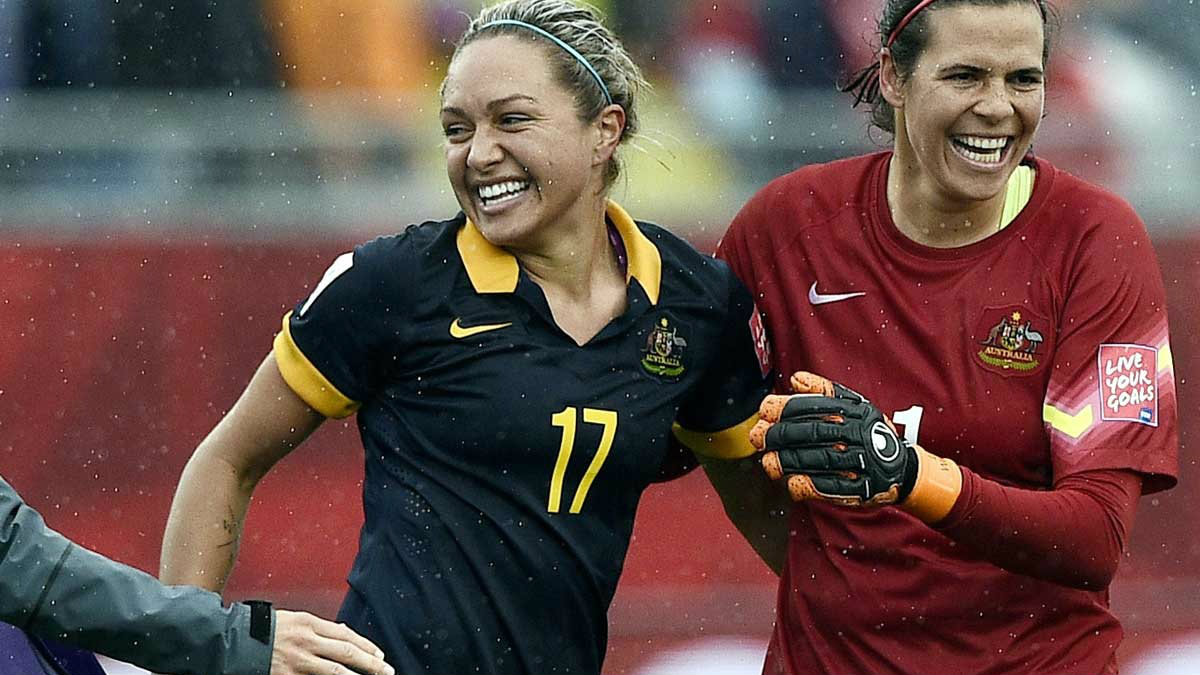
Simon was only a teenager when she scored the winning penalty to nab the win for Australia in the 2010 AFC Women's Asian Cup.
One year later she would become the first Indigenous Australian to score at a FIFA World Cup.
And at the Tokyo Olympics last year she hit 100 caps and became the first Indigenous player to do so.
In an article for Code Sports, Simon said this is the first time some of her family will be watching her play live.
"It will be the first time Dad, Sarah (sister) and Trey (nephew) will get to watch me play a World Cup live, presuming all goes to plan and I'm there for my third appearance," she said.
"Given the size of my greater family, I already know I'll be maxed out with tickets.
"Before all that though, there's a whole lot of training to be done, and football to be played, to make sure I'm in the best possible shape."
Williams too is making a difference on and off the pitch. In July she reached her 100th cap and became the first Matildas goalkeeper to do so.
The Noongar woman has also teamed up with the Bridging the Gap foundation to raise funds for regional and remote care centres in the Northern Territory.
Football Australia's general manager, Butchulla and Gubbi Gubbi woman Courtney Hagen said the National Indigenous Advisory Group is working to provide First Nations opportunities to players, administrators, officials and media.
"Football Australia is proud of its rich history of First Nations footballers who have represented our national teams at all levels an in the national leagues," she said.
"We currently have five representatives across our women's nationla team programs but also acknowledge that more can be done to increase this representation.
"Our ambition is to create a culturally safe and strong environment to accelerate the development of future Indigenous players in the CommBank Matildas.
"With the eyes of the world on Australia with the co-hosting of the FIFA Women's World Cup 2023, we are excited to be able to share the full story of women and non-binary Indigenous participation in our game and celebrate their contributions to this transformative moment for women's football."
The Women's World Cup kicks off in July 2023.



