




Fifty years after Cyclone Tracy tore through Darwin, the voices of Aboriginal survivors are finally taking their rightful place at the centre of remembrance. Tracy's Echo: 50 Years of Resilience, now open at the Museum and Art Gallery of the Northern Territory, is more than an exhibition. It is a reclamation of memory and a space where healing, truth and cultural strength come together. It is community led, deeply personal and grounded in the stories that have too often been left out of mainstream retellings.
The exhibition features 18 artworks created by First Nations artists who survived Cyclone Tracy or who inherited its memories across generations. A newly commissioned sound work fills the space with the haunting textures of wind, silence and impact, capturing the fear and stillness of the night that tore Darwin apart. This exhibition is not simply observed. It is felt in the body.
Curator and artist Joanne Nasir stands at the heart of this project. She was just 12 years old when Cyclone Tracy made landfall. Her family sheltered in their car at Knuckey Lagoon as their home disintegrated around them.
"The house was collapsing all around us, the sheet iron roof flying off," she recalled. "The whole family jumped into the car along with our dog Dottie to shelter."
Even fifty years later, the memories return in ways she cannot predict.
"It comes over you in waves, taking over your whole body. Sometimes I just need to be still and let it ride out through me."
Creating art has allowed her to release and reclaim these memories.
"It has been incredibly emotional, but also therapeutic, putting my feelings down on paper, letting go," she said. "The cyclone changed our lives in many ways and changed Darwin."
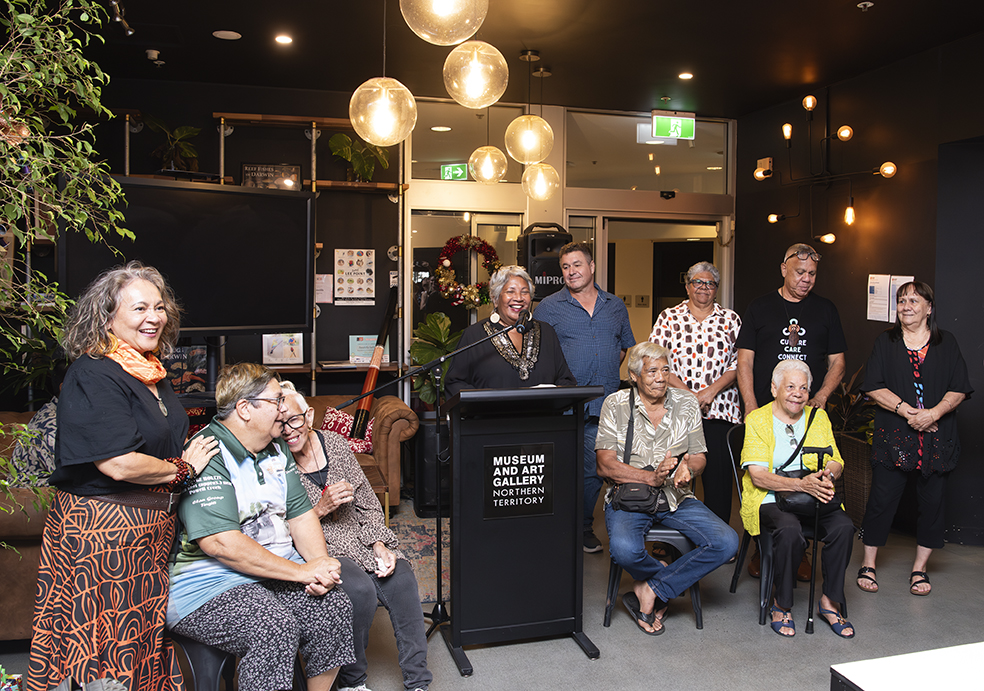
At a recent panel session led by facilitator Tanyah Nasir, featuring artists Aunty Barbara Nasir, Joanne Nasir, Les Huddleston and Peter Thomsen, hearing them speak about the lead up to the cyclone, the moment it hit and the long aftermath that followed, was powerful in a way words struggle to capture.
They spoke of Christmas Eve preparations interrupted by an uneasiness in the air. Of families gathering close, unsure but alert. Of the hours where the wind changed shape, first loud, then louder, then something beyond sound entirely.
Peter Thomsen shared: "You never forget the sound. It stays with you. Not just in your ears, but deep in your chest, like your body still remembers how to brace for the next gust."
Aunty Barbara told a story that left the room silent.
"When I heard all that noise, I did the only thing I could think of. I put my youngest son in the only big cupboard still standing in the spare room. I just wanted him safe."
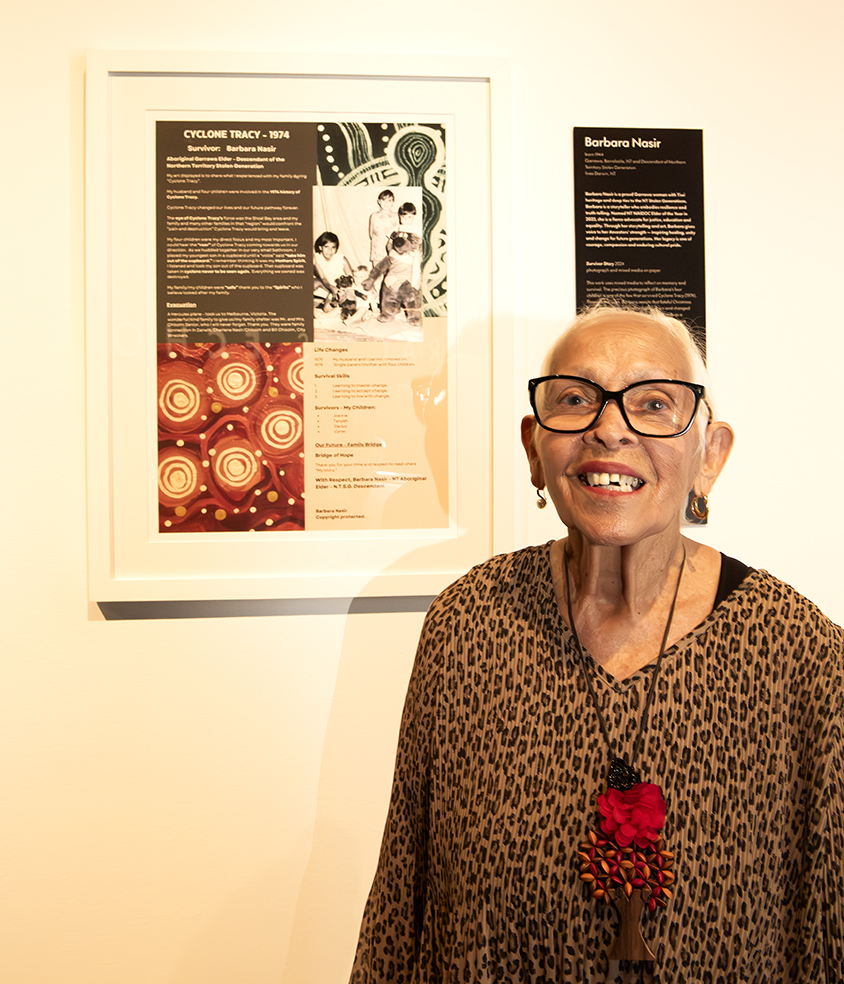
Their reflections on the aftermath were equally moving. Families searching for one another. Communities banding together. Country scarred yet still offering guidance and grounding. Barbara spoke of the resilience that held them through, Les shared memories of rebuilding side by side, and Peter talked about the emotional weight that came long after the physical recovery.
MAGNT Director Adam Worrall says Tracy's Echo is a vital platform for First Nations truth telling, offering space for survivors to lead the narrative on their own terms. The exhibition, along with the artist talks and panel sessions, ensures these stories are preserved, respected and carried forward.
Tracy's Echo reminds us that the story of Cyclone Tracy is not only about destruction. It is a story of survival. A story of cultural endurance. A story of families who rebuilt not just homes but community, identity and hope.
I felt honoured to witness their courage and grateful that the next generation will learn directly from their voices rather than only from history books. This time, their voices are leading the way.



