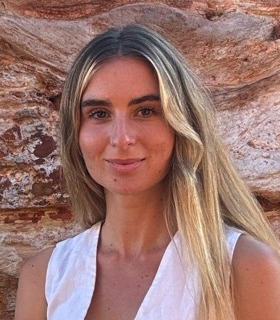

"Cleveland Dodd didn't die because he ran out of chances - he died because the world refused to give him one," says WA youth-justice advocate Gerry Georgatos, author of the soon-to-be-released Cleveland Dodd: Child of the Desert Sunrise.
Cleveland Dodd died on 19 October 2023 after spending a week on life support following a self-harm incident inside Unit 18, the youth wing of Casuarina Prison, a maximum-security adult facility, 35 kilometres south of Perth.
The 16-year-old Yamatji boy had been in custody for about three months before his death.
During that time, he was routinely confined for more than 22 hours a day.
Records show that on 74 of the 86 days he was detained in Unit 18, he spent almost the entire day locked inside, with minimal access to programs or fresh air.
In the early hours of 12 October, Cleveland told officers over the intercom that he intended to take his own life.
Staff told him not to talk that way.
The CCTV camera in his cell had been covered with toilet paper since mid-afternoon, but no one removed it.
About 13 minutes later, officers found him unresponsive. He was taken to Fiona Stanley Hospital and placed on life support.
Cleveland never regained consciousness.
Surrounded by family, he died a week later, he was the first child in Western Australia's history to die while in youth detention.
At the time, he had been removed from the "at-risk" list despite earlier threats of self-harm. That night he was also refused water multiple times after asking repeatedly for a cup.
A coronial inquest, still underway, has exposed serious failures inside WA's youth-justice system.
Witnesses and officials have told the court that Unit 18 was unsafe, chronically understaffed and unfit for purpose - a place where officers were often unable to provide even basic care.
The Department of Justice has since formally apologised to Cleveland's family, admitting he was not given enough time out of his cell, was denied water, and that staff failed to uncover the blocked camera that might have shown what was happening inside.
Coroner Philip Urquhart has issued preliminary findings, describing youth detention in WA as "in crisis at the time of Cleveland's death".
He has indicated he may recommend closing Unit 18 "as a matter of urgency" and has flagged a potential special inquiry into how the facility was established and operated.
Cleveland's death generated widespread national attention, but Mr Georgatos is determined to go deeper.
"It's a book about a boy, not a headline," he says.
"Cleveland was loved, he mattered. He was a 16-year-old Yamatji kid full of life, dreams and potential.
"The book tells his story, but it's also about the system that failed him. It traces what he went through at Banksia Hill and Unit 18, the warnings that were ignored, the preventable mistakes, and the heartbreak that followed.
"Across 21 chapters, I've tried to honour his life while confronting the institutions that contributed to his death; to show what went wrong, what could have saved him, and what must change."
Mr Georgatos worked closely with Cleveland's mother, Nadene Dodd, to portray the artistic and deeply empathetic boy behind the headlines.
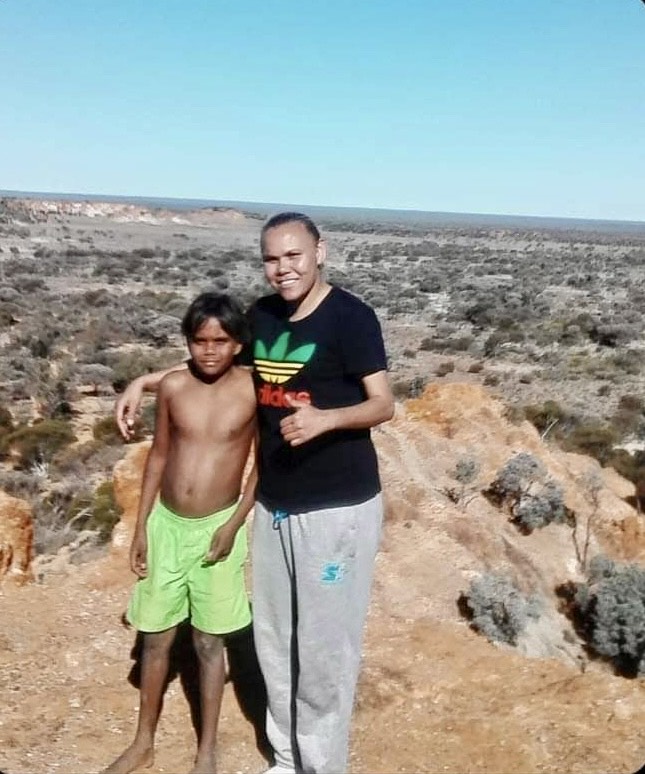
"His mother remembers when he was six or seven, he'd see a homeless person and ask, 'Mum, do you have any change to give them?' He had empathy; he cared deeply about others."
Cleveland grew up between Laverton in the northern Goldfields and Meekatharra in WA's Mid West - both small, remote Aboriginal towns where families are tightly connected across Country.
Life in these communities is defined by resilience and strong cultural ties, but also by the challenges of isolation and scarce services.
It was in his early childhood, with the red sand under his feet, that he found a lifelong calling to the desert.
"He loved the red dirt and the riddles of the desert."
Cleveland was first arrested at 13 while living in Kalgoorlie.
He moved in and out of the youth-justice system until his final stint - the one he would never leave.
WA law prohibits publication of the specific offence that led to his last sentence.
While the book celebrates Cleveland as an individual, it also takes a forensic look at the system that failed him.
"He spent over a year in Unit 18," Mr Georgatos laments.
"There were only about a dozen kids there. If we can't get it right for twelve children, what hope do we have for a justice system?"
Mr Georgatos argues that youth who commit crimes need mentors, not confinement.
"We need attendance officers, outreach mentors, engagement workers; people to inspire these kids," he says. "Without that, the same tragedies will repeat."
He points to Norway's "Nordic model" as a blueprint for what change could look like.
Norway's youth-justice system focuses on prevention, rehabilitation and reintegration, though young people can be held criminally responsible from the age of 15.
Imprisonment is treated as a last resort - and when it happens, it's in small, purpose-built centres that prioritise education, therapy and family contact.
Judges, social workers and psychologists collaborate on individual rehabilitation plans addressing mental health, schooling and skills development.
The system assumes that even serious offenders can change if properly supported, aiming to reintegrate them into society rather than entrench them in cycles of incarceration.
When you compare that model to Australia's record, the gap is stark.
In Norway, detention of young offenders is rare; rehabilitation is the default.
In Australia, police proceeded against 185 in 10,000 young people aged 10-17 in 2022-23, while detention rates hovered around 2.7 per 10,000 according to the Australian Institute of Health and Welfare.
In WA, overall crime grew to 292,605 offences in 2023-24, government figures show.
For a boy like Cleveland Dodd, confined for months, denied help, and left unseen behind a paper-covered camera, Norway's approach offers more than theory.
For Mr Georgatos, It suggests what might have been possible if justice in WA had been built to heal rather than punish.
The proceeds of the book will be donated to purchase a headstone for Cleveland, as well as going into a trust that will finance his five younger siblings going to boarding school.
"A boy from community to cage; we will interrogate the political failures that allowed Unit 18 to exist, that turned a child into a statistic instead of seeing him as a soul," Mr Georgatos said.
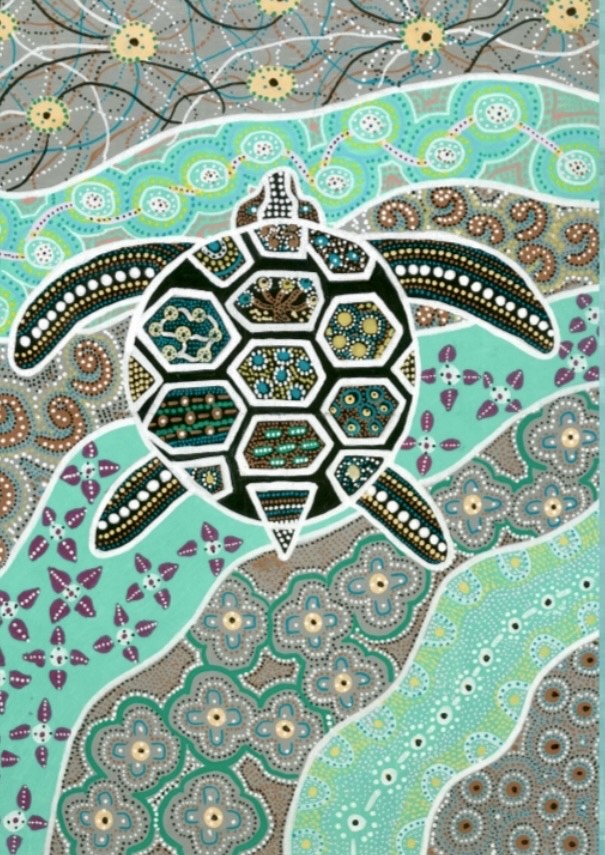
In the weeks before his death, Cleveland painted a tortoise adrift in clashing patterns of turquoise, metal and desert blue, a quiet masterpiece that now carries his memory on the back cover of Child of the Desert Sunrise.