



The van den Berg sisters want to encourage women to make time in their busy schedule to screen for breast cancer at a BreastScreen WA mobile clinic, for themselves and for their family.
As recommended, the trio have been having mammograms together every two years since 2007 since the age of 45 years.
Leanne, Deb, and Sharon always relied on their mum to make the group appointment with a mobile clinic who recognised it was important to catch the cancer early for better health outcomes.
Since their mum passed away in 2022, they have continued the tradition as they have a history of breast and ovarian cancer in the family.
Leanne said one screen is not enough, you need to be screened regularly every two years
"Mum would be proud of us," said Leanne, who has a rose tattoo on her arm to honour her mum.
"It's a bit of together time – just us girls. We usually go and have a cuppa afterwards."
Leanne, who worked at BreastScreen WA for almost 20 years, said that getting a screen with others is good for those who don't want to be alone.
BreastScreen WA screened 135 thousand mammograms last financial year free of charge, and travels throughout Perth suburbs and to more than 100 remote and rural areas.
As part of a new initiative to encourage Aboriginal and Torres Strait Islander women to use the free BreastScreen WA service, the sisters were given a striking pink sarong to use during the check-up, and to take home.
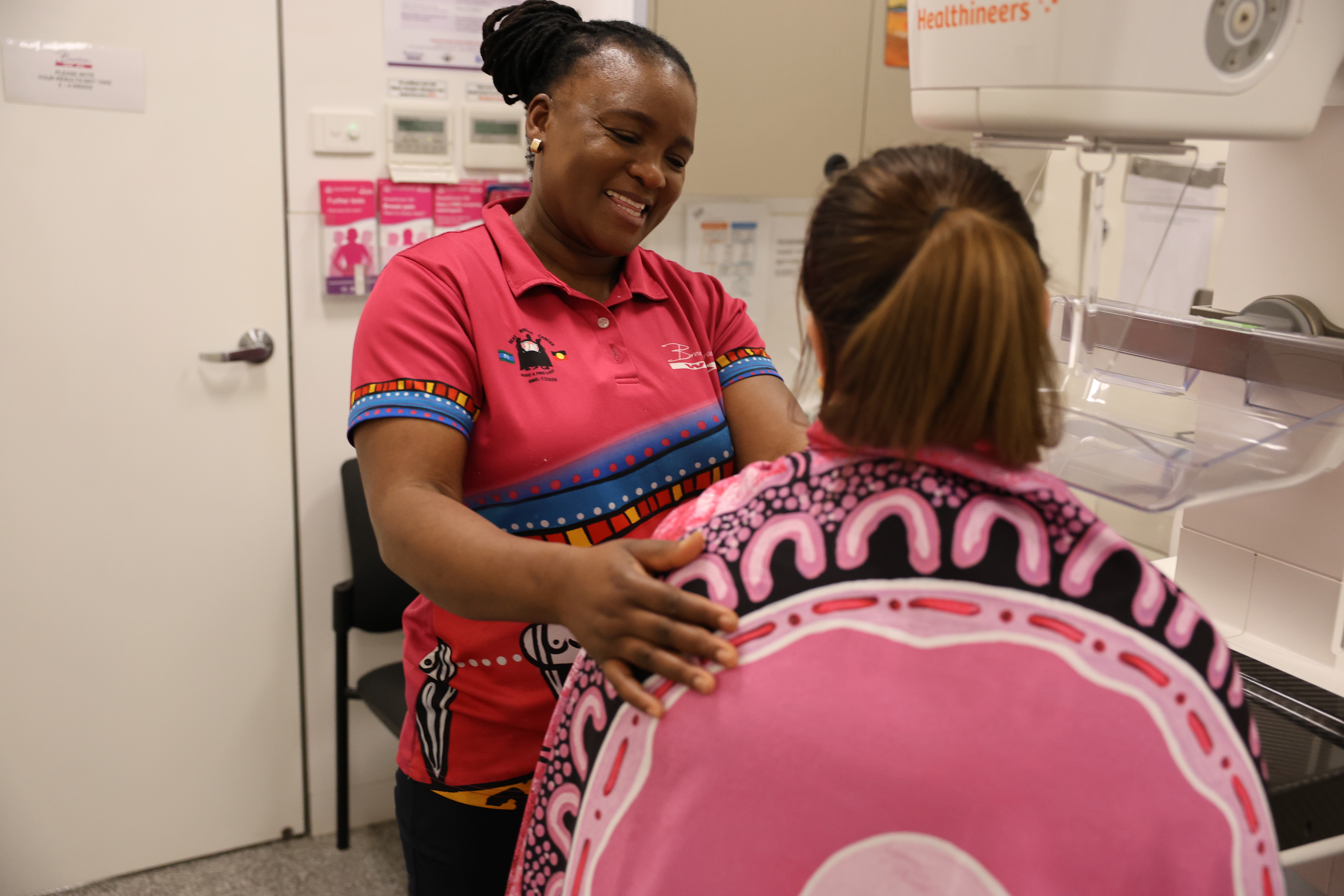
Senior Aboriginal Health Program Officer for BreastScreen WA, Kelly Cameron, said the sarongs were a way to increase the cultural safety, comfort, and protection of Aboriginal women participating in breast screening. Aboriginal women who book their mammogram at events with BreastScreen WA are eligible to receive a sarong.
"It can be a bit confronting for some women to have to remove their shirts for the screening. So, these sarongs are both beautiful and practical," she said.
The sarong design is by WA artist and Pinjarup-Whadjuk woman Chloe Calyon.
The artwork features women surrounded by meeting place symbols "representing communities offering support, strength and guidance".
The three sisters recall stories that their dad was one of the first bus drivers commissioned by BreastScreen WA to drive women thousands of kilometres from remote Aboriginal communities to Laverton for screening. The bus load of women would be scanned for breast cancer and travel home the next day.
BreastScreen WA is committed to working with Aboriginal and Torres Strait Islander women to support access to free breast screening by providing a culturally safe environment, culturally approved resources and developing partnerships within the local Aboriginal communities of WA.
The organisation encourages women take time out of their busy schedule and make a date with a sister or friend to get screened for breast cancer.
Location information is available online at BreastScreen WA - Breast screening locations (health.wa.gov.au).



