




Nearly 40 years after the deaths of two Indigenous cousins, a legal loophole in the NSW Crimes Act has been closed, ensuring offenders who commit acts of sexual violence or indecently interfere with a body, when the time of death is uncertain, cannot escape prosecution.
In December 1987, 16-year-old Murrawarri and Kunja girl Mona Lisa ("Mona") Smith and her cousin, 15-year-old Wangkumara girl Jacinta Rose "Cindy" Smith — described as "like sisters" — were found beside the wreckage of a ute on the Mitchell Highway between Bourke and Engonnia.
Non-Indigenous man Ian Alexander Grant, then 40, was discovered by witnesses with his arm draped across the body of a bare-chested and partially naked Cindy. He was later acquitted of driving-related offences, while a further charge of interfering with a corpse was dropped on the eve of trial.
At a 2023 inquest, then-Detective Inspector Paul Quigg told the court that Grant should have been charged with manslaughter.
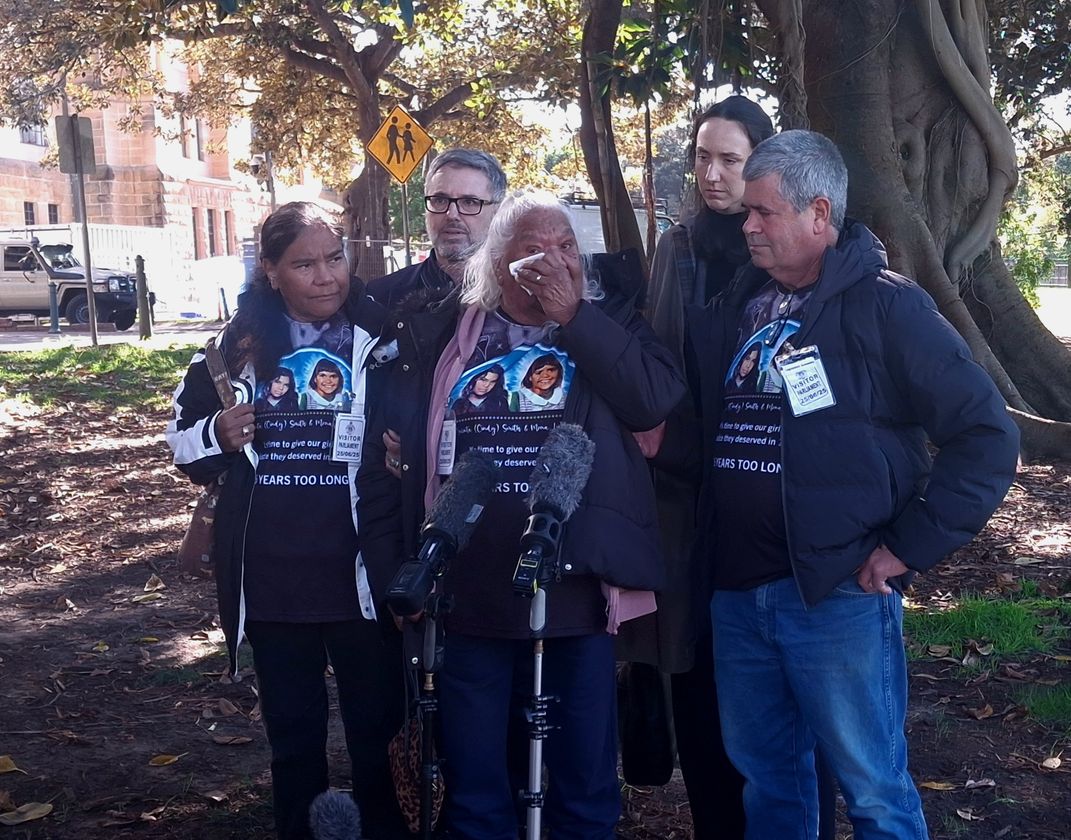
This week, amendments to the NSW Crimes Act 1900 passed the upper house and now await assent. Known as Cindy's Law, the reforms came directly from the inquest into Mona and Cindy's deaths and the tireless advocacy of their families.
Cindy's mother, Dawn Smith, said the family had "waited too long for justice for our girls".
"Justice that will never come," she said.
"I hope no one ever has to go through what my Cindy went through, but if they do, I am comforted that these changes might help them find justice. We will always love and remember our girls."
Cindy's Law ensures if someone sexually assaults or interferes with a body after death, they cannot avoid prosecution because the time of death is uncertain. If it is proven beyond reasonable doubt that one of the crimes occurred, but it's unclear which due to uncertainty around timing, the offender will face sentencing under the lesser maximum penalty.
Speaking in June when the amendment was first introduced, Aunty Dawn said she had spent decades imagining the future her daughter never had.
"I've always wondered what she would have been like today, whether she would have married and had kids," she said.
"You think of all of these things. I miss her very much."
.jpg)
The National Justice Project (NJP), which represented the families during the inquest, noted until now, uncertainty around which specific crime occurred often meant sexual offenders went unpunished.
NJP CEO Adjunct Professor George Newhouse said the passage of Cindy's Law was a hard-won legacy of family courage over nearly four decades.
"For 37 long years, the families of Mona and Cindy Smith have carried the unbearable weight of grief and injustice, and their tireless pursuit of truth has been vindicated," he said.
"The coronial inquest confirmed what the family has always known: that the legal system and police failed their daughters and failed them."
The inquest revealed major failures in the original investigation: police failed to preserve evidence, did not contact Mona's mother after her death, and ran what State Coroner Teresa O'Sullivan called an "inexplicably" deficient inquiry, influenced by racial bias.
"The uncomfortable truth, to my mind, is that had two white teenage girls died in the same circumstances, I cannot conceive of there being such a manifestly deficient police investigation into the circumstances of their deaths," Ms O'Sullivan said.
"Horrifyingly, the evidence suggests Mr Grant sexually interfered with Cindy after she passed."
In 2023, then-NSW Police Commissioner Karen Webb rejected a recommendation to create formal guidelines for reviewing past investigations.
At the time, Mona's sister Fiona Smith said the decision was disappointing but unsurprising.
"There's a long-standing history of racism in the NSW Police and it looks like it's going to continue," she said.
Asked in June whether she wanted a police apology, Aunty Dawn told reporters: "They don't really mean it… they look you in the face then stab you in the back."
.jpeg)
Mr Newhouse said it was "hard to believe that charges were dropped because it could not be determined whether the assault occurred before or after Cindy's death." He added the "failure" to prosecute Grant, when Ms O'Sullivan noted sufficient evidence existed at the time, "understandably caused Cindy's family unimaginable hurt".
"The courage of Mona and Cindy's families, along with their unwavering demand for accountability, has led to this important law reform," he said.
When tabling the bill, NSW Attorney-General Michael Daley acknowledged the families' presence in the chamber, calling Mona and Cindy's deaths a "profound tragedy".
"The inquest into Mona and Cindy's deaths, which concluded last year, was a direct result of their unrelenting advocacy," he said.
"Law reform cannot erase the tragedy of the loss of those two little girls but I'm grateful to have the opportunity to improve the law and make sure that no other offenders avoid justice."
Barrister Julie Buxton, who represented the family at the inquest, said the reform was "vital to ensure sexual offending does not go unpunished in the future — particularly given the disproportionate rate such crimes impact First Nations girls and women".
"I pay my enormous respect to Mona and Cindy's family — the bravery and grace with which they conducted themselves throughout the harrowing evidence at the inquest, and their fierce determination to seek legislative change to prevent other families enduring such horror and injustice," she said.



