For a time, I lived in Karratha on a house block covered in dastardly buffel grass and little else.
My dream was to establish a thriving native garden that would attract local wildlife and show case Pilbara plants. People told me I was mad, where was I going to get the plants? Have you ever tried digging a hole in that rock hard ground? You know some years we barely get enough rain to fill a thimble!
I was young and naïve, but I was also determined and as I liked to say to my students, persistence is a highly underrated skill.
Stage one in any garden development is planning, stage two getting the earthworks complete and laying the reticulation... In my head I'd jumped ahead to the final stage, planting out the garden and I had a wish list as long as my arm. I'd enrolled in the local TAFE to do a horticultural course and was learning to propagate things like Sturt's desert pea, sennas and wattles. All pretty simple stuff.
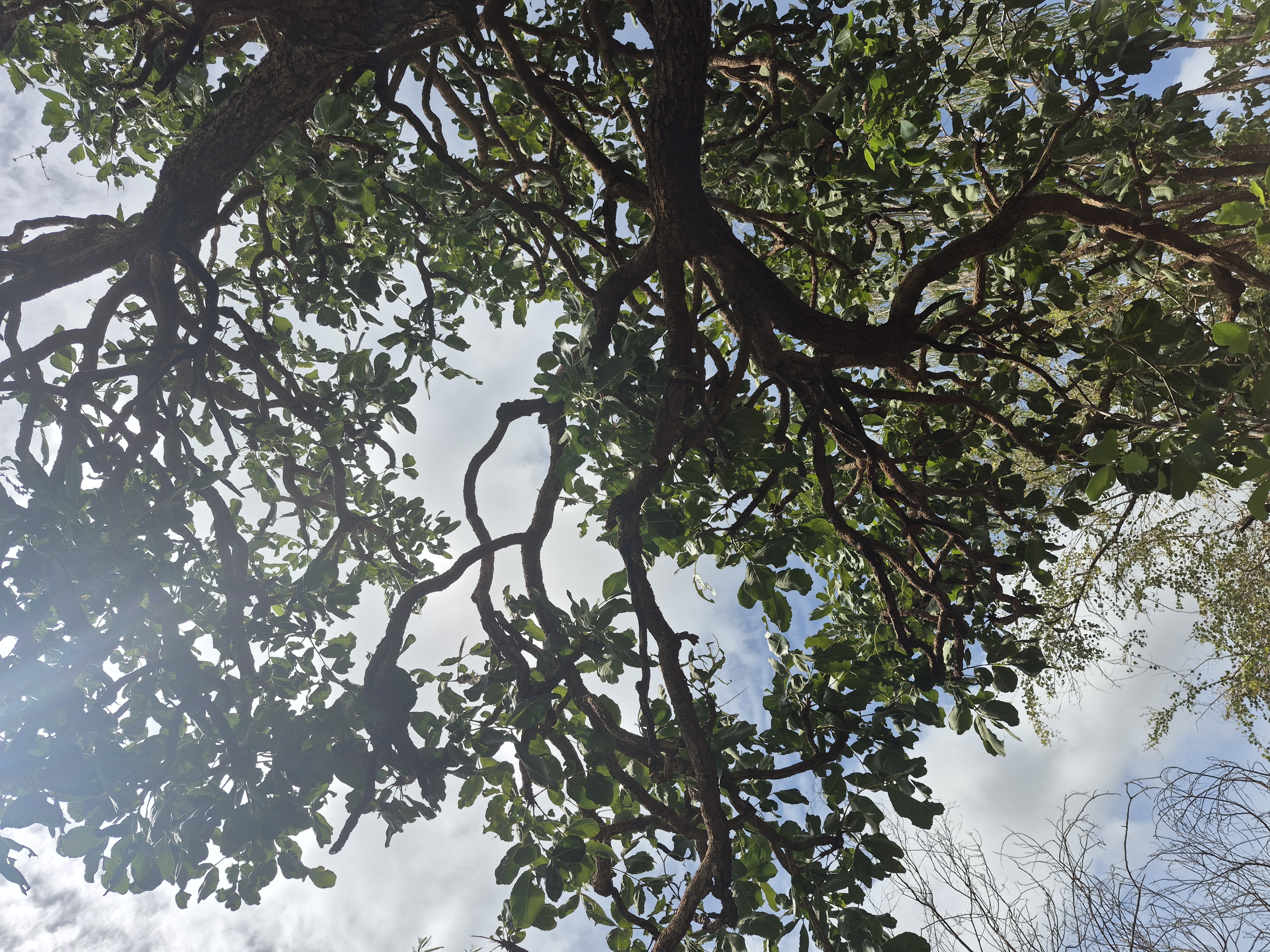
About the same time, I'd made a trip to Exmouth and been entranced by a tall (by Pilbara standards) shady tree growing on top of the rolling red sand dunes. It had large leathery leaves, thick corky bark and on the ground beneath there were large round brown skinned nuts about the size of a Tom Bowler. I added this tree to my burgeoning plant list.
I duly collected some and took them back to the CALM botanist in Karratha who explained they were the fruit of Owenia reticulata, roundly known as the desert walnut. My next question was how do you grow it? He answered: "With great difficulty."
He wasn't wrong, the nuts were as hard as a rock and no amount of squeezing, banging or bashing could get them open. Eventually I sawed the remaining few in half to discover they were empty. I don't like to admit it but I put this one on the backburner.
However, I must have been manifesting it all in my head because about six months later driving back from Roebourne after a week of summer rain, I stopped at the only grove of desert walnut trees that I knew of within 100 kilometres. To my amazement I discovered a seedling newly sprouted from a nut lying on the ground. Last time I checked the tree is still in our old garden 25 years on.
Now you may be wondering - "What has this got to do with bush tucker?" 15 years ago, I reconnected with a parent of some children I taught, and she recounted to me how as a child in the Great Sandy Desert her family used to collect these same nuts, known as ngarlka. They'd be cooked on the fire so they could be easily cracked open to extract the kernel.
Walmajarri people know the desert walnut as the Turtujarti tree.
Living in the Great Sandy Desert it held a very important place in their daily life not only providing shady relief from the relentless sun and good firewood, but importantly it provided a reliable source of mangarri, especially in tough times when other food was scarce.
Families I know continue this practise whenever they get the opportunity to go out and live and camp on country. Want to learn more? Get hold of Pat Lowe and Jimmy Pike's book You Call it Desert, We Used to Live There.