




For the first time ever recorded, the great desert skink has been recorded on Matuwa Country.
Considered a vulnerable species, rangers have been working hard to look and protect the skink, or as it's known on Matuwa Country, the tjakura.
Protected by more than ten different ranger groups in central Australia, a national recovery plan from the Indigenous Desert Alliance has been developed to help preserve tjakura.
Also know as tjalapa, warrana and mulyamiji, the tjakura is a burrowing skink measuring about 440 millimetres when fully grown.
Recently, Indigenous rangers discovered the skink on Matuwa Country, north-east of Wiluna in Western Australia.
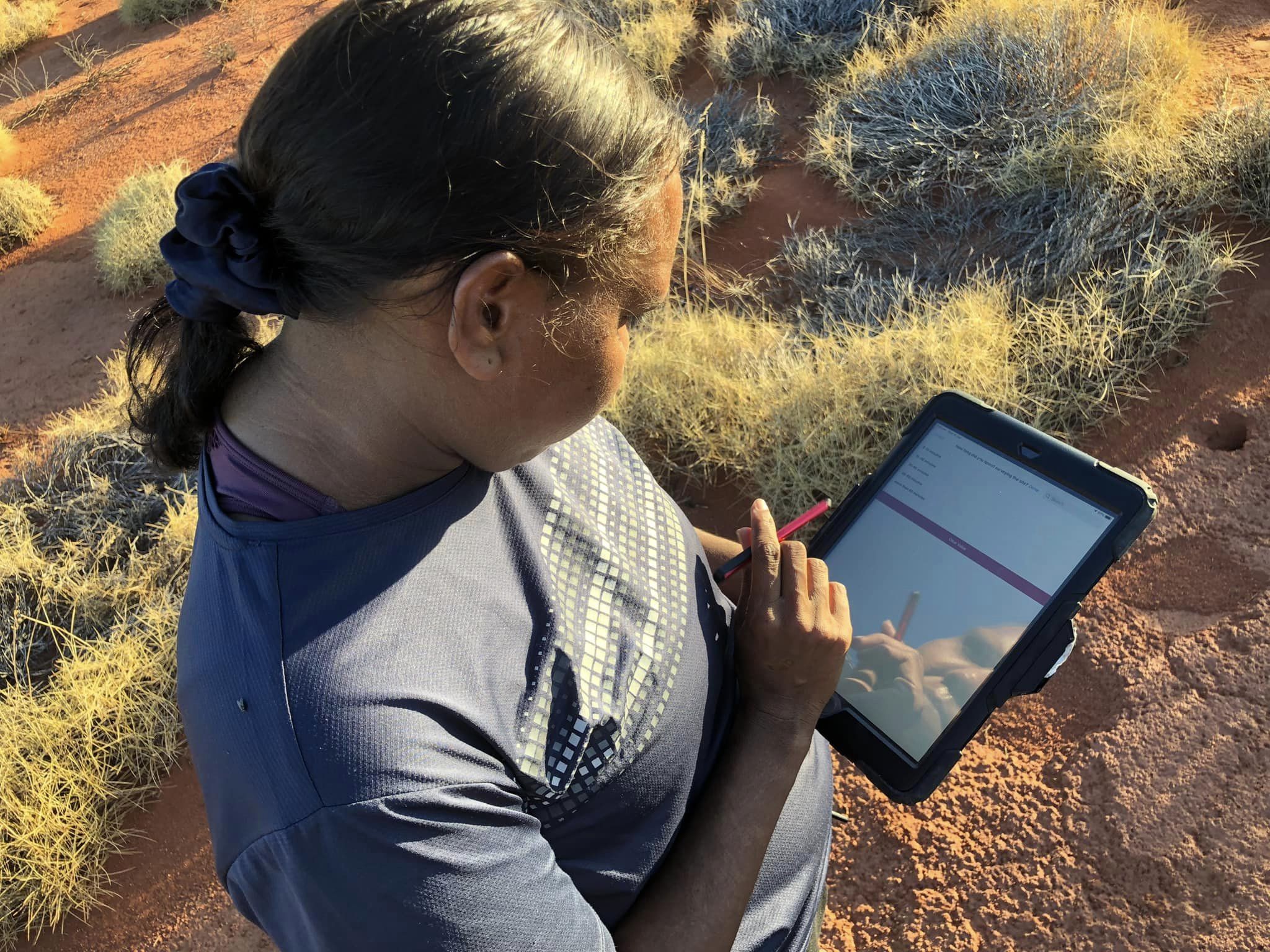
According to Wiluna rangers manager, Dorian Moro, there was some indication and evidence the tjakura might have existed but until recently it was unverified.
Alongside some female rangers, Mr Moro went out to these incidental areas in 2022 and set up remote cameras in hopes of catching a tjakura on one of them.
It was only this year when they returned, finding six active boroughs and fresh scats.
"We put out three remote cameras at selected burrows and then came back the next day to look at what was on the photos," he said.
"When we took the cameras back with the rangers to look at the SD card, one of them popped up with a great desert skink very nice and clear at 11 o'clock at night.
"So with the presence of active latrines, active burrows and good evidence of skink tracks, plus now photographs of the animal collected and verified by Rachel (threatened species ecologist at the Indigenous Desert Alliance) we are very comfortable to say there's great desert skink here at Matuwa."
.png)
Since their recent discovery, there have been even more pictures taken of the tjakura by the University of Sydney on Matuwa Country.
Moro said the surprise was palpable when they realised there was a photo of a tjakura on one of the remote cameras.
"There's a lot of images, basically we assumed all the images collected had nothing on them," he said.
"It was only at night we could see the tjakura in the black and white image and that's when I went to the rangers.
"I guess having not seen them, the fact that it was the actual skink we were looking for they were quite excited by it."
Despite the excitement all the rangers feel, Mr Moro said the next steps are to see if any other sites sprout sightings of the tjakura.
"The next step is to go to some of these other sites where we have evidence of the animal on cameras and just walk those areas to see if we also have active latrines and burrow systems," he said.
"Then we'd want to look at our fire history maps and include those in our fire management planning to ensure that if and when we do our right way burning with rangers, we recognise these are areas where the skinks occur."



