


Figs (namely the domesticated fig Ficus carica, originating in the Middle East) have been in cultivation well before Greek and Roman times and it wasn't until just recently that I appreciated why. I was wandering around Fort Arthur's Head in the port city of Fremantle and happened to glimpse an old fig tree laden with fruit.
Not liking to miss out on freebies I helped myself, the sensation of the sweet red flesh had me gasping for more. I filled my pockets and went home to share my treasures with family and friends.
Despite Ficus carica and its cultivars being the only fig commonly cultivated in backyards there are many of the more than 800 species of figs worldwide that are edible.
The Kimberley region of Western Australian has an abundance of figs found in a range of habitats, from deserts, along riverbanks and into rainforest patches. They are an important source of food for many species of birds and mammals who are instrumental in spreading their seeds through droppings and scats. Many a time I've sat in a rocky gorge under a Ficus virens entranced by the variety of birds feeding and calling as they gorge themselves on the ripe fruit.
My all-time favourite is the sandpaper fig, Ficus aculeata. Although they can't compare to the size of the domesticated variety, they do match it in their sweetness. When ripe the plump fruit turn from green to black exuding small droplets of nectar.
Unfortunately, not all trees produce ripe fruit as they are reliant on tiny fig wasps burrowing into the fruit to pollinate the flowers. So not only is finding ripe fruit a challenge but also harvesting, as you are often competing with large red meat ants for the sweet bounty. Sandpaper fig occurs in a range of habitats including laterite ranges and pindan woodland. On the Dampier Peninsula it is known as ranyji in Bardi, jirrib in Nyul Nyul and ngamarnajina in Yawuru.
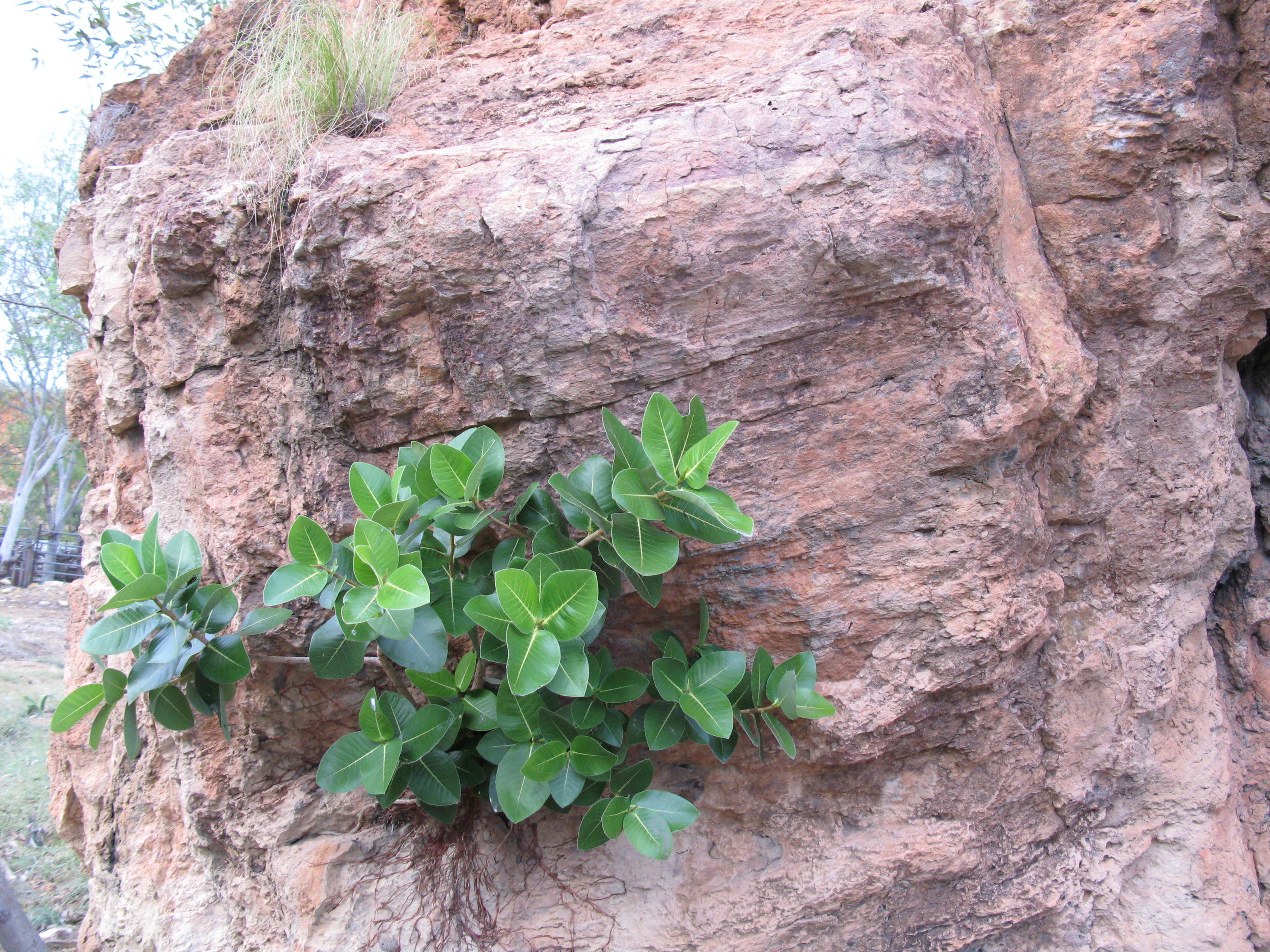
There are several other edible figs in the Kimberley including the cluster fig, Ficus racemosa, which is easily identifiable by the large red figs clustered along its trunk and major limbs. Cluster figs grow along rivers and streams and are sometimes found in association with Ficus coronulata, the river fig, which also features edible fruit. Rock figs, Ficus leucotricha and Ficus platypoda, are found deep into the desert wherever rocky outcrops and gorges occur. They feature long, thick, adventitious roots snaking through and around rocks. The taste of its fruit often depends on the last rain event.
Individual figs produce an enormous number of tiny seeds and are simple to propagate. I always look for seed beneath the tree that has been through the digestive tracts of birds or mammals. I find germination from these seeds fail safe. Emergent seedlings are extremely small and it pays to give them a month or so in the tray before potting them on. Figs with aerial roots will also grow from cuttings. Why not have a go - nothing ventured, nothing gained.



