
An Indigenous family in Boorloo/Perth is facing eviction from community housing despite paying off a rental debt.
Nicola Torres and her two daughters have lived in a home managed by Foundation Housing since 2021.
The rent for the community housing home, which Foundation Housing leases from the state government, should be means tested - but when Ms Torres temporarily stopped working in 2025 after a traumatic experience, her rent was not reduced. She went into arrears and Foundation Housing pursued eviction proceedings.
Ms Torres then received a compensation payment related to the traumatic experience which had caused her to stop working for a time and paid the rent in full.
She said Foundation Housing refused the payment and returned the money to her, and continued with the eviction proceedings. She then received a notice warning her she would be evicted on Tuesday, January 6.
"I was unable to work for some time due to my mental health and also my own caring responsibilities. That (the rent) built up mid-2025, which I paid Foundation Housing back in full. They responded wanting to know my bank details and they returned the money in full," Ms Torres said on Tuesday.
She said there was no explanation given as to why the payment was not accepted, and she was notified in late September/early October she would be evicted, saying she felt "disbelief at first" when it was received.
Ms Torres said the stress and uncertainty has caused "friction" in her family.
"I have never been I this situation or process before, just being really unsure about what me and my family are going to do, where we are going to do," she said.
"It's not easy, it is a lot of stress."
Ms Torres said the situation had compelled her to speak out publicly, "which also imposes on my children's privacy, which is not ideal".
Ms Torres used the compensation payment to buy a caravan to ensure her family would have somewhere to stay if they are evicted, given the huge wait-list for community and public housing in Western Australia, currently in excess of 23,000 applicants.
She noted on Tuesday she believed the wait time for community and public housing is now "over a decade".
She said she is not sure what the family will do if evicted, short of "packing up the caravan and going wherever we can go".
"It's very concerning. It's not a safe place out there, especially... for young girls."
Ms Torres expressed concern for other families facing similar situations.
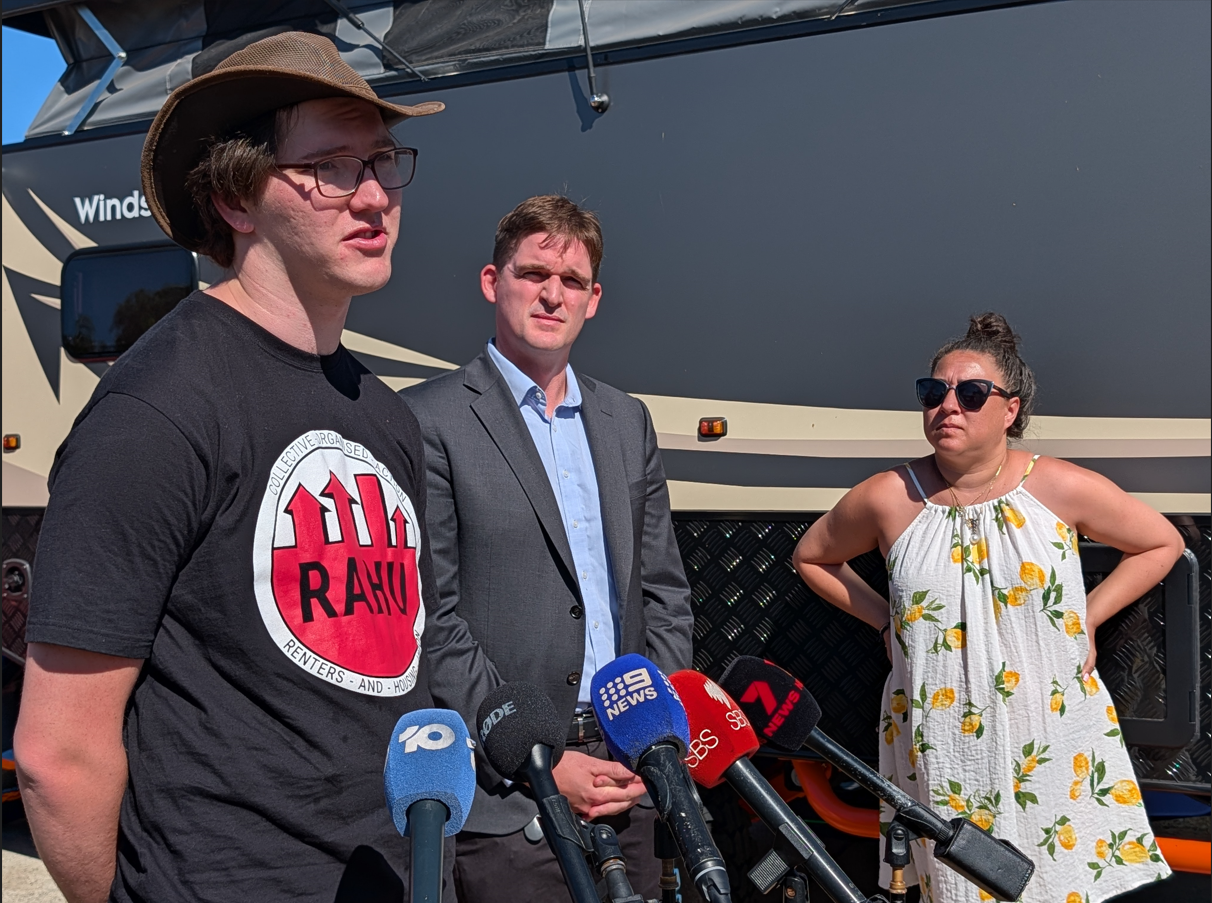
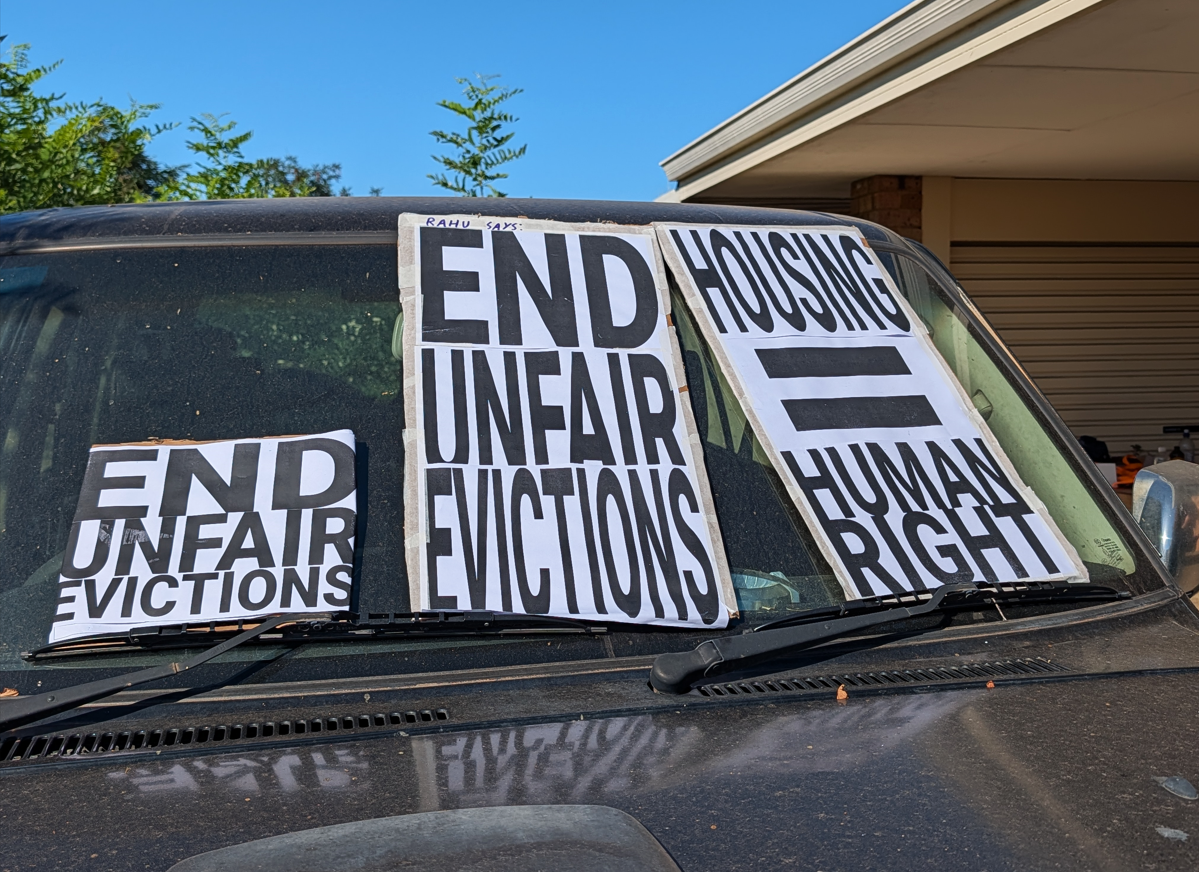
Members of the Renters and Housing Union (RAHU) WA gathered at her home in south-east Perth to form a community picket in support of Ms Torres and her family, and to oppose the eviction.
Greens MP Tim Clifford joined the community picket and urged reform to the state's housing policy.
"We are here today to tell the state government that this is a political choice; you can either choose to evict people from their homes or you can intervene and stop this from happening. That's the choice you've got to make," he said.
Mr Clifford noted the much higher eviction rate in WA's community housing sector (state owned but operated by the private and not-for-profit sectors) than in the public housing sector (state owned and operated).
He said the system was designed to serve the interests of "investors over those of people looking for a place to live", and described the affordable housing crisis as "a national disgrace".
WA Minister for Social Housing John Carey told a press conference on Tuesday that "as a government and as community housing providers we do everything we can to sustain tenants in social housing".
"The majority of tenants... live their lives peacefully but from time to time tenants have to be managed... Ultimately there have to be consequences if people don't agree with tenancy agreements," he said.
The Minister said it was his understanding that "misinformation" was being "pedaled" about the case "by advocates and the WA Greens".
"Everyone goes out of their way to prevent evictions and to sustain tenancies, that is the general principle... We understand the consequences and they are serious, but we also have a responsibility to manage tenancies," he said.
Mr Carey alleged Ms Torres had not provided required evidence regarding her income since February 2025.
"Ultimately this is not a decision... for the government. It has been considered three times by a magistrate and they have decided an eviction still stands," he said.
The Minister did not answer questions sent to his office by National Indigenous Times including as to why the eviction rate was significantly higher in NGO-managed community housing (such as Ms Torres' home) than in government-managed public housing.
National Indigenous Times has contacted Foundation Housing for comment.