




Coral bleaching detected across an area of west Kimberley coastline is the "worst seen on country" according to Indigenous land and sea managers the Bardi Jawi Rangers.
The Rangers warned on Tuesday that "climate change is here and real".
Located on the northern most tip of the Dampier Peninusla, the Bardi Jawi Rangers manage a large swathe of land and sea country, including the 950 square kilometre Bardi Jawi Indigenous Protected Area (IPA).
Ranger Coordinator Phillip (Bibido) McCarthy said the widespread coral bleaching was first noted when rangers travelling by boat observed extensive white corals beneath the sea's surface.
"It is quite shocking because there is visibility of whiteness everywhere, we've never seen anything like this this previously, not to this extent," he said.
"The reef is one of the most important habitats for our fish, animals and small crustaceans. It's also a very important food source for the Bardi people.
"We don't know what sort of impact bleaching like this is going to have on our reefs and how it could change the ecosystem down there."
Mr McCarthy said the bleaching event should serve as a warning, not just to those living in the north of Western Australia but all Australians.
"What the scientists are saying is real. The temperature of the water is rising and there is a clear impact on the coral," he said.
"Global warming is happening and if we don't do anything about it now, what is going to be left of the coral and what is going to be the impact to all the animals and humans as well?
"This will impact everything, not just Indigenous people but the whole world."
Coral bleaching happens when corals become stressed and, increasingly, in response to unusually warm water temperature. If warm temperatures persist, the corals eventually die.
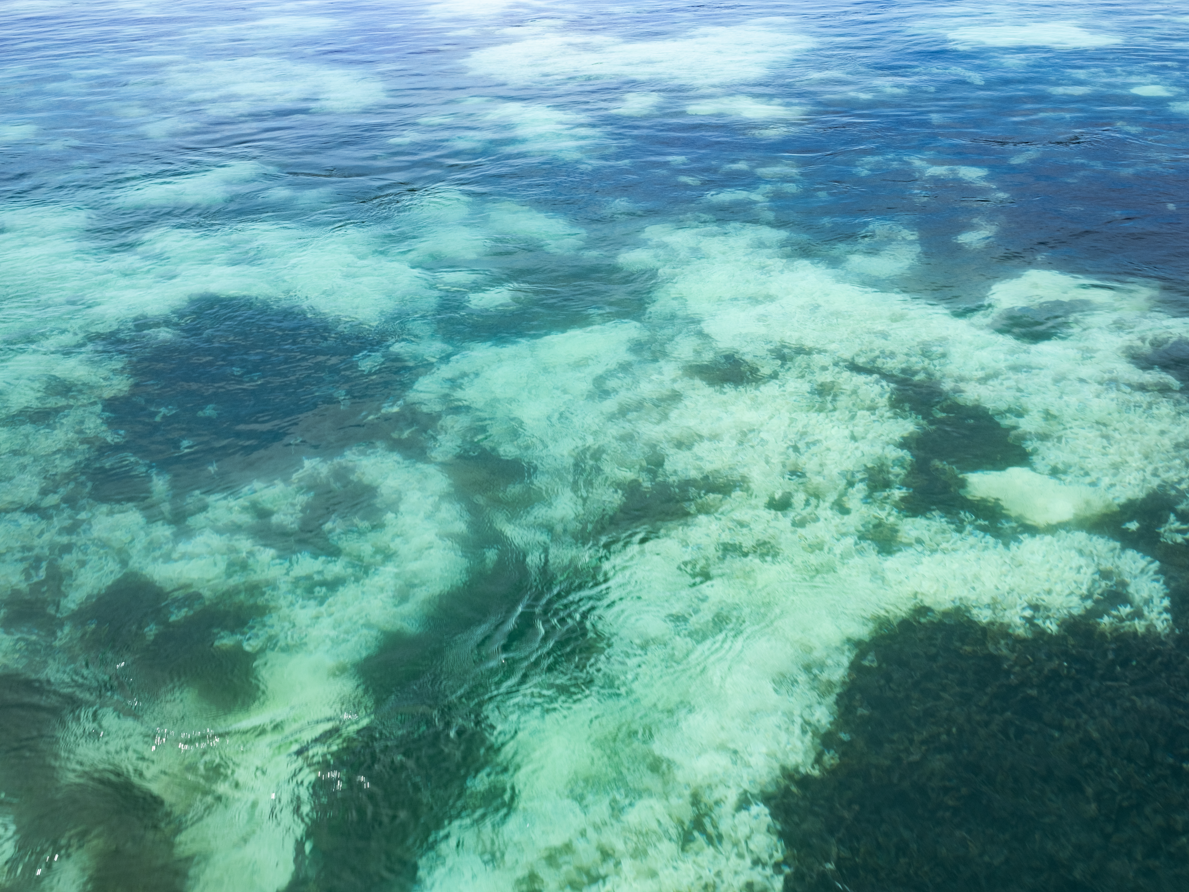
In Western Australia, sea surface temperatures in tropical waters have been the highest, or close to the highest, on record in recent months.
To better understand the impact of sea level temperature on Bardi and Jawi Sea Country, the Bardi Jawi Rangers have been working in partnership with the Australian Institute of Marine Science for over 10 years, building long-term data on coral reef and fish health across Bardi and Jawi Sea Country.
AIMS coral reef researcher Nicole Ryan said bleaching has come at an unexpected time and has been observed extensively along the WA coast by AIMS scientists and partners across research and management organisations.
"Normally, we survey for bleaching effects during April/May which is the peak of heat exposure for corals. This year, we have received observations as early as January," she said.
AIMS research scientist Dr Katherine Cure said it has been "confronting" to receive footage of widespread bleaching from the Bardi Jawi Rangers.
"Their sea Country is a region we thought of as being highly resilient to warm water events," she said.
"We are grateful to the Rangers for applying their knowledge of sea Country and AIMS training to collecting this data."



