




Systemic issues related to the transportation of children and young people to and from Northern Tasmania's Ashley Youth Detention Centre (AYDC) have been highlighted by the state's Office of the Custodial Inspector.
Tasmanian Custodial Inspector, Dr Grant Davies, said his Office's review, Security contractor transport of young people in custody: safeguarding review 2025, revealed "significant inconsistencies" in the Department for Education, Children and Young People's (DECYP) safeguarding of those in their care.
The claims relate to when young people are transported from Hobart and Launceston Reception Prisons to AYDC, as well as from AYDC to medical appointments, court and other offsite activities.
Tasmania, similar to other Australian states, detains First Nations youth at a higher rate per capita than non-Indigenous youth.
The rate of First Nations youth detained in Tasmania during the June 2024 quarter was 9.1 per 10,000, making the rate ratio for First Nations young people aged 10-17 in detention in the state 3.5 times that of the non-Indigenous rate.
The report indicates the majority of journeys are fulfilled by security officers from Essential Security, a private company contracted by DECYP.
Dr Davies said despite concerns being raised by his office, along with other oversight bodies such as the Commissioner for Children and Young People, over a number of years, private security officers continued to be used for this purpose.
He said while DECYP had some safeguards to protect children and young people during transport, they did not have systems in place to oversee their use and effectiveness.
"Safeguards can only protect children and young people if they are consistently applied, meaningfully embedded and overseen by robust internal systems as well as independent bodies," he said.

The review was prompted following a incident late last year involving a young person who needed clinical attention was being transported from AYDC to the Launceston General Hospital and back.
Security officers reported the young person was spitting, so they covered his head with his own t-shirt, creating an improvised 'spit hood,' while his hands were handcuffed behind his back.
The young person told Custodial Inspector officers investigating the incident the improvised spit hood made it "hard to breathe".
"The use of an improvised spit hood had the potential to cause significant physical and psychological harm to the young person," Dr Davies said.
"We understand that staff - whether they be at AYDC, private security officers or hospital staff - have a right to be safe and have made recommendations in relation to this in our report.
"But children and young people in custody must be treated with humanity and respect and not subjected to any treatment that is in contravention of their basic human rights."
Dr Davies said the use of spit hoods is not legislatively banned in Tasmania.
At the time of the late 2024 incident, although spit hoods were not used in AYDC, they were not explicitly banned in policy.
"While DECYP and AYDC have since made steps to rectify this - including communicating to AYDC and Essential Security staff that all spit hoods, including improvised ones, are prohibited - we believe prohibiting spit hoods by law would provide an even stronger safeguard," Dr Davies said.
"That's why we're recommending that the Tasmanian Parliament legislate to ban the use of spit hoods and improvised spit hoods in all circumstances."
Calling for "the full and prompt implementation" of the Office's recommendations, Interim Commissioner for Children and Young People, Isabelle Crompton, welcomed the tabling of the report in state parliament on Tuesday.
"Let us be under no illusions - an improvised spit hood is still a spit hood," she said.
"For the avoidance of doubt, there are no circumstances that make the use of any spit hood on a child acceptable.
"They are dehumanising, harmful, potentially dangerous, and entirely incompatible with child rights."
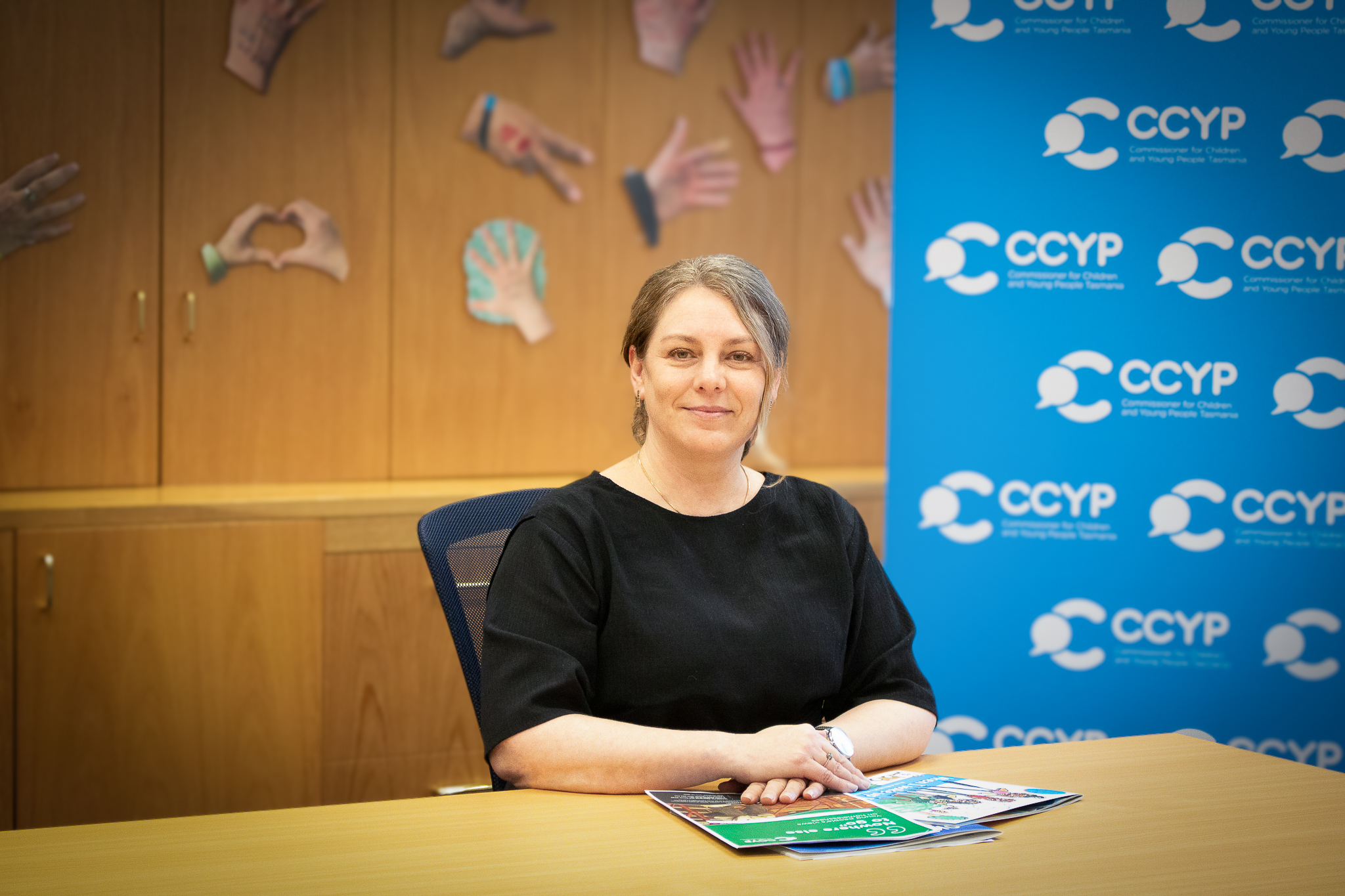
Ms Crompton said the Tasmanian Government must meet the standards set by the United Nations Convention on the Rights of the Child.
"The Convention makes clear that 'every child deprived of liberty shall be treated with humanity and respect for the inherent dignity of the human person," she said.
"This standard applies to any setting where a child is in custody, including when being transported."
Responding to the report, Greens Children and Young People Spokesperson, Cecily Rosol, said: "It's completely unacceptable that the human rights of children and young people continue to be violated in custodial settings."
"There has been a systematic failure by the DECYP to oversee the practises of private security officers and ensure children and young people are safe," Ms Rosol said.
"These systemic failures have allowed unsafe practices during transport of children and young people by contracted security services."
Ms Rosol called for the Tasmanian Government to "fully adopt and implement the recommendations of the Custodial Inspector to ensure the safety of Tasmanian children".
Responding to questions posed by National Indigenous Times, Tasmanian Minister for Children and Youth, Jo Palmer, said: "The Government acknowledges the importance of independent oversight and safeguards to protect the rights of young people in the youth justice system and supports the intent of the Custodial Inspector's review and recommendations."
"The Department is actively progressing work to ensure practices remain aligned with contemporary therapeutic models at all times," Ms Palmer said.
"The contract specifications for transport of children and young people to and from Ashley Youth Detention Centre (AYDC) are under consideration to ensure they are fit for purpose.
"Spit hoods are prohibited and not in use at AYDC, including makeshift spit hoods such as t-shirts or any material that covers the face, and the prohibition extends to use on transports to or from the centre."
Dr Davies said his inspection team had uncovered a number of other systemic issues of concern during their investigations.
They included concerns surrounding Incident reporting; oversight of use of force, including the use of handcuffs, during transport; screening, vetting and training of private security officers; the use of standard vehicles when transporting children and young people; ongoing staff shortages at AYDC; and consistent, therapeutic care for children and young people during transport.
"The review revealed that when young people were offsite, they were cared for by security officers who had not always been approved by DECYP," Dr Davies said.
"In addition, if the security officers used force on young people while offsite, this was not being adequately reported.
"There were limited mechanisms for overseeing security officers' conduct. These are safeguards that are embedded at AYDC and should extend to journeys offsite."



