


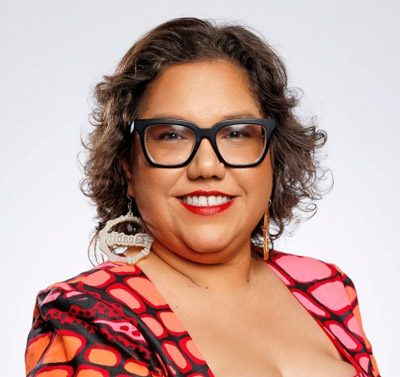

Professor Jaquelyne Hughes, a proud Torres Strait Islander woman and trailblazing nephrologist, has made history as the first Aboriginal or Torres Strait Islander Fellow of the Royal Australasian College of Physicians (RACP) to deliver the esteemed Arthur E. Mills Memorial Oration.
With this honour, she joins the ranks of legendary orators including the late Dr Lowitja O'Donoghue, Noel Pearson, and Professor Marcia Langton; yet she brings something profoundly distinct: a life and legacy that weaves cultural identity with medical excellence.
Her Oration, titled "Culture Practiced in Medicine", was a deeply personal tribute to both her heritage and her vocation.
Reflecting on her journey, Hughes said: "I spoke about the influence of health leaders in my family, as a place of deep encouragement to be useful to people… so that was a reason to study medicine and choose a career helping people with chronic kidney disease."
For decades, Professor Hughes has worked to improve the lives of Aboriginal and Torres Strait Islander people living with kidney disease. Based in Darwin on Larrakia Country and working from Flinders University's Northern Territory Medical Program, her approach to medicine is shaped by dual commitments—to clinical care and cultural integrity.
"The big pivot's have been choosing to approach the fork in the road and make sure I place myself, my time, skills and energy in things that help others in their health journey," she explained.
"From my base in Larrakia Country, I can connect my work to others here in the NT and nationally and internationally to create strong work for Aboriginal and Torres Strait Islander people."
The Arthur E. Mills Medal recognises the "promotion and encouragement of medical education and general culture." But for Hughes, it is also a mirror of her lived experience. In her Oration, she drew unexpected parallels between her life and the medal's namesake, a pioneer of Australian medical education.
"I related that my life is not that different… the capability of seeing people and servicing their health needs, and moulding a career over decades that addressed transformational need of society in the time we each worked," she said.
But it was one powerful statement that crystallised her impact: "I want for Aboriginal and Torres Strait Islander people to be cared for by people who love us and offer care and protection."
This declaration is more than a vision; it's a call to action, rooted in cultural safety, accountability, and community strength. It also reflects the spirit of her bestowed title — "A Koike of Medicine of Wagadagam" — gifted by her late father, a senior Elder of her clan and tribe, in recognition of her role in healing and leadership.
Professor Hughes's work is not confined to the clinic or classroom. She is leading national and international research, including the NHMRC-funded project "And We Are – Determined as Indigenous Leaders to advance First Nation kidney health," and the long-term Torres Strait initiative Kikirriu Dan Walmai – Our health is resurrected through overcoming illness.
She also continues her work with the National Indigenous Kidney Transplant Taskforce, ensuring access, equity, and excellent transplant outcomes for First Nations patients.
Looking forward, her goals are bold and clear: "I want for Aboriginal and Torres Strait Islander people to have excellent kidney health, and be known for excellent kidney health, and to support more of our health care champions to support this transformational health opportunity in Australia."
To the next generation of First Nations women in health, she offers heartfelt advice: "Be proud of who you are, and find love and care from family, friends and allies… Take care of your knowing (your scholarship), and be proud of it."
With this Oration, Professor Hughes has not only been recognised; she has reshaped what leadership in medicine looks like. She reminds us that true care is cultural, that excellence is collective, and that health justice begins with seeing, hearing, and healing our own.



