


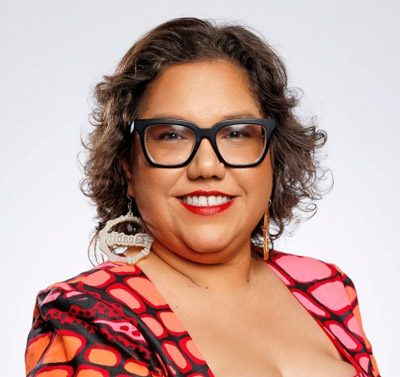

Kamilaroi man Associate Professor Corey Tutt has spent years working to change young peoples' perception of science.
As the driving force behind Deadly Science, he is helping young people reconnect with science in a way which feels familiar, relevant and grounded in their own realities.
Backed by support from The John Villiers Trust, this work is gaining momentum across Queensland. But what makes it different is not just the scale. It is the approach.
Rather than positioning science as something to be learned from afar, Deadly Science brings it back to where it has always existed. It lives in the knowledge passed down through generations. It is present in the way communities understand land, water and seasons. It shows up in the resourcefulness, problem-solving and observation which are part of daily life.
When young people begin to see that connection, something shifts.
For Rilee Webber, who grew up in Mount Isa on Kalkadoon Country, that shift changed everything. Before engaging with Deadly Science, the idea of a future in STEM was not something she had seriously considered. It felt too far removed from her world.
"My vision of a career in science was not heavily supported," she said.
"I always knew that Aboriginal people were the first scientists thousands of years ago, but I never understood that today we have so many First Nations scientists working on research."
Ms Webber said growing up in a rural community meant exposure to modern-day First Nations science careers was limited.
"This perspective was mainly influenced by the limited exposure of science in a rural community let alone exposure to modern day First Nations Science," she said.
Things changed after Ms Webber attended Deadly Science's WEHI STEM Camp in Melbourne, where she met First Nations scientists leading groundbreaking medical research.
"Among attending the camp, I was exposed to a First Nations Scientist leading Cancer research," she said.
"Right there and then is when my whole vision changed.
"My path now consists of working to be something I know I can be, because right in front of me was living proof."
Now studying Pharmacy in Brisbane after previously undertaking a Bachelor of Science, Ms Webber said representation and visibility remain critical for young people in regional and remote communities.
"For a rural student, you want exposure. No matter how big or small the exposure is, it is still exposure to something you didn't know or see before," she said.
"Without hope we tend to fall into spaces that don't support us. We see this too often in our communities."
Ms Webber said science education goes far beyond textbooks and classrooms, helping young people build confidence, curiosity and critical thinking skills that carry across every part of life.
"The youth are known for asking questions and having curiosity," she said.
"Science is fundamental knowledge where every student should have the access to, to help answer those questions."
The impact extends beyond individual stories. Investment from The John Villiers Trust has enabled the organisation to grow its presence across regional Queensland, creating opportunities not just for students, but within communities themselves.
Local people are being employed to deliver programs, bringing both professional skills and cultural understanding into the space. That matters. It means learning is not just accessible, it is meaningful.
In regions where access to healthcare and scientific professions remains limited, this kind of work is critical. It is about building pathways that allow young people to step into those roles without having to leave their identity or their communities behind.
Ms Webber said her message to other young people considering STEM pathways was simple.
"Invest in your curiosity," she said. "It will pay the best interest."



